
Construction guide
Houston Lead-Safe Renovation Planning Guide
A practical Greater Houston guide for owners planning renovation work in older homes, multifamily properties, schools, and child-occupied facilities where lead paint may be disturbed.

Renovating an older property in Greater Houston can look straightforward on a drawing and become much more complicated once painted surfaces are opened, sanded, cut, or demolished. For owners of older houses, multifamily properties, child-care facilities, and schools, lead-safe planning should happen before demolition begins, not after dust appears in the work area.
The U.S. Environmental Protection Agency’s Renovation, Repair and Painting program applies to covered renovation work that disturbs lead-based paint in pre-1978 homes and child-occupied facilities. EPA’s rule framework requires covered firms to be certified and requires certified renovators to use lead-safe work practices. The rule is not a blanket statement that every older commercial building falls under the same requirements, so owners should first determine whether the property type, age, occupancy, and planned scope place the work within the program.
For a Greater Houston owner, the practical lesson is broader than regulatory compliance. Lead-safe work can affect sequencing, occupant protection, access, cleaning, subcontractor coordination, and the amount of time needed before spaces can be returned to normal use. Those issues belong in preconstruction planning.
Confirm whether the scope triggers lead-safe requirements
Start with four facts: the building’s construction date, the occupancy type, the surfaces that will be disturbed, and the contractor performing the work. EPA identifies pre-1978 housing and child-occupied facilities as central categories under the RRP program. Covered renovation can include work by general contractors as well as trades such as painters, plumbers, electricians, and HVAC contractors when their activities disturb painted surfaces.
That means an owner should not limit the review to obvious painting work. Window replacement, wall openings, electrical upgrades, plumbing access, cabinet removal, selective demolition, and other common renovation activities can disturb coatings even when painting is not the main purpose of the project.
The owner team should document the answer before mobilization: Is the property covered? Which work areas involve painted surfaces? Which contractors will disturb those surfaces? Who is responsible for certification and field controls? If there is uncertainty, resolve it with the appropriate qualified professional or regulatory guidance before the schedule depends on an assumption.
This step also helps separate lead-safe renovation from lead abatement. They are not automatically the same activity, and the correct project approach depends on the actual scope and applicable requirements.
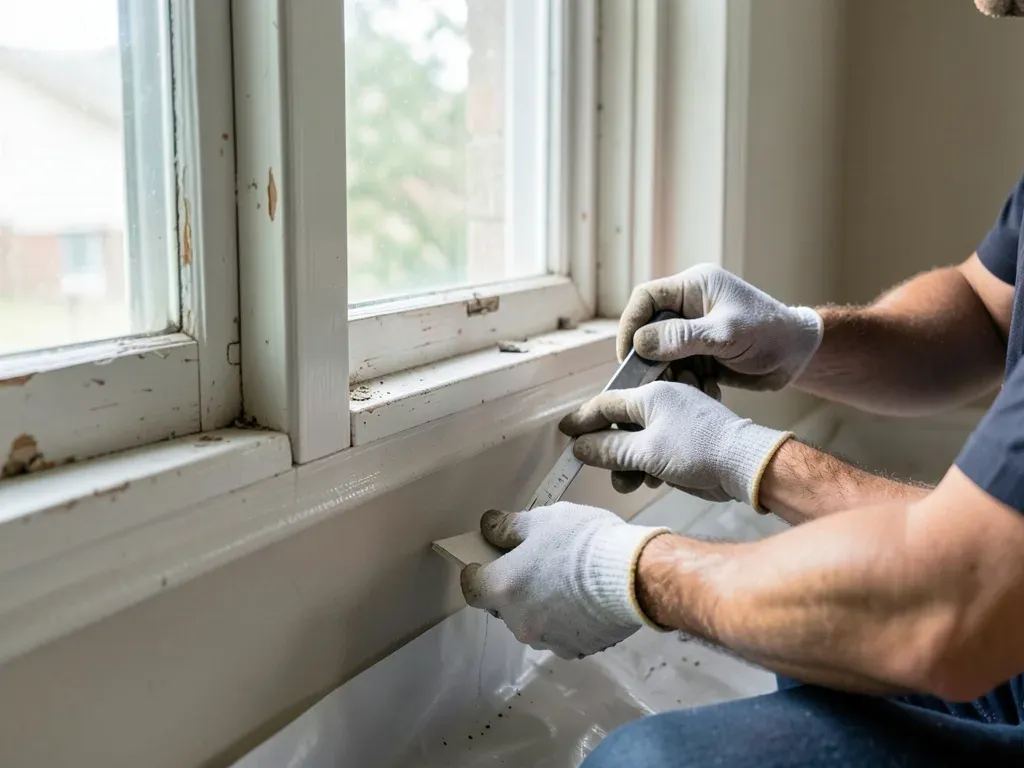
Build containment and access into the renovation sequence
EPA’s lead-safe framework emphasizes controlling dust, containing the work area, cleaning thoroughly, and preventing contaminated debris from spreading into occupied or unaffected spaces. Those requirements are easier to execute when they are reflected in the logistics plan instead of treated as an extra field step.
For an occupied property, map how residents, tenants, staff, visitors, and workers will move around the affected area. A containment boundary that blocks the only practical route through a unit or corridor can create operational problems. On a multifamily project, repeating the same work across many units can multiply small access mistakes into a schedule problem.
Owners should ask the project team to show where the work zone begins and ends, how materials and debris will move, how nearby rooms will remain separated, and when the protected area can be released. Heating and cooling pathways also deserve attention because air movement can carry dust beyond the immediate work area if the sequence is poorly planned.
The safest project plan is not necessarily the most elaborate one. It is the one that matches the actual work, keeps unaffected areas protected, and gives the field team enough space to work without repeatedly breaking the containment strategy.
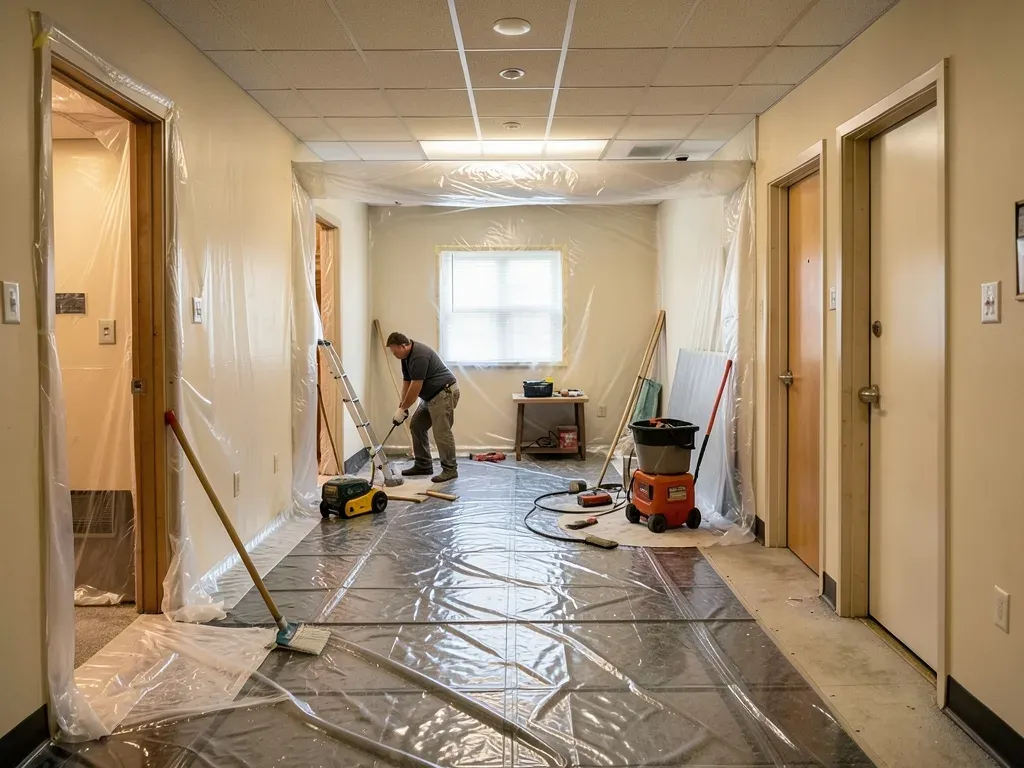
Coordinate the trades before they enter the work zone
Renovation scopes often overlap. A carpenter may remove trim before a window installer arrives. An electrician may open a wall before a painter prepares the surface. A mechanical contractor may need access through an area that another trade has already contained. If each subcontractor plans independently, the project can lose control of both dust and sequence.
The owner or construction manager should identify which trade establishes the protected work area, which trade maintains it, and who restores it if another subcontractor must pass through. Responsibility for debris handling, daily cleanup, final cleaning, and documentation should also be clear before work starts.
This is especially important on phased renovations. A unit or room that appears complete may still be affected by adjacent work if workers carry tools or debris through finished spaces. Staging locations, trash routes, temporary storage, and worker access can all influence whether the lead-safe plan remains effective.
Procurement matters as well. Confirm required equipment and protective materials are available before the work begins. Waiting until the first day of demolition to locate suitable vacuums, plastic sheeting, disposable materials, or other controls can turn a manageable task into an avoidable delay.
Treat cleanup and release as part of the schedule
EPA’s rule materials emphasize cleanup and verification, not just dust control during active demolition or repair. For owners, this means the end of the task should have a defined release step rather than a vague assumption that the space is ready when visible debris is gone.
Build the cleaning sequence into the look-ahead schedule. Determine who performs it, what areas are included, how waste is removed, and what verification process applies to the covered work. Do not schedule furniture installation, resident return, or finish work immediately after a dust-producing activity unless the required cleanup and release process has been completed.
On repetitive work, use the first completed area as a process check. If cleanup takes longer than expected, adjust the production rate before the same error affects dozens of rooms or units. That is an owner-level schedule decision, not merely a housekeeping detail.

Keep documentation connected to project closeout
Lead-safe planning also produces records. Depending on the work, those records may include firm and renovator certification information, occupant notices, project documentation, cleaning or verification records, and other materials required by the applicable program.
Owners should decide where those records will live before the project starts. A simple closeout structure is better than trying to reconstruct the file months later. Keep the lead-related documents connected to the same project controls used for permits, submittals, inspections, and turnover information.
For multifamily or portfolio owners, consistent recordkeeping has another benefit: it helps future renovation teams understand what was done, where work occurred, and what assumptions were used. That can reduce repeated investigation and prevent future teams from treating prior renovation history as guesswork.
Use lead-safe planning as a renovation feasibility check
The most useful time to identify lead-related constraints is while the scope and budget are still flexible. If a project involves many painted surfaces, occupied spaces, repeated unit turns, or aggressive phasing, the lead-safe plan can affect labor, temporary protection, logistics, and schedule.
A strong preconstruction review does not need to predict every field condition. It needs to identify the points where the project could lose control: an unknown building age, an unclear occupancy classification, a contractor without the required certification, a containment plan that conflicts with access, or a turnover schedule that ignores cleaning and verification.
For Greater Houston owners, that approach turns lead-safe renovation from a late compliance issue into a manageable construction-planning task. Verify the rules that apply to the specific property, coordinate the responsible contractors early, and make containment, cleanup, and documentation part of the baseline plan.