
Industry analysis
Houston Grid Investment: What Developers Should Watch
A new federal grid award for Greater Houston adds to a broader expansion cycle. Owners should separate regional infrastructure investment from project-level power availability.
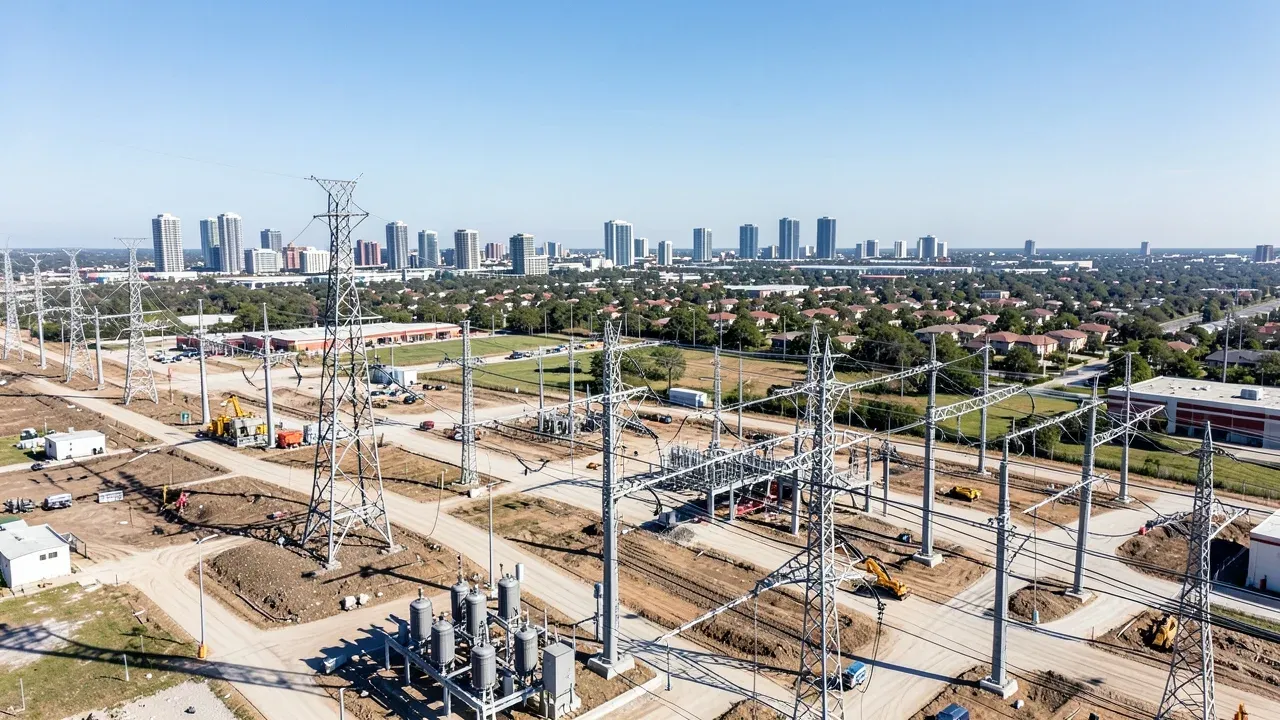
Greater Houston received a new electric-infrastructure signal on September 24, 2026. CenterPoint Energy announced that it had been selected for a $50 million U.S. Department of Energy award supporting advanced substation technology intended to strengthen reliability, resiliency, and capacity in the region. The company said the award remains subject to finalization of negotiations with DOE.
The same day, DOE announced 31 selected grid-improvement projects across 26 states under its Speed to Power through Accelerated Reconductoring and other Key Advanced Transmission Technology Upgrades initiative, known as SPARK. DOE said the national portfolio represents $5.25 billion in total investment, including $1.9 billion in federal funding and $3.35 billion in recipient cost share, and is expected to unlock more than 23 gigawatts of additional electricity capacity.
For Houston owners and developers, those announcements matter as evidence of regional and national investment in grid capacity. They do not mean that a particular commercial, multifamily, industrial, or mixed-use project automatically has the power capacity it needs. Distribution feeders, substations, service voltages, project loads, requested energization dates, utility studies, easements, and required upgrades remain site specific.
The useful response is to treat electric service as an early development workstream rather than assuming that broader grid investment will solve project-level timing.
The September award is part of a much larger capacity story
CenterPoint’s September 24 announcement describes the Houston award as support for advanced substation technology that can respond rapidly to changes in electricity demand. The company linked the project to reliability, resiliency, and capacity for Greater Houston.
DOE’s broader SPARK announcement provides the national context. The selected projects are intended to use reconductoring and other advanced transmission technologies to move more power through existing infrastructure and reduce bottlenecks. DOE emphasized that the portfolio is designed to use existing rights-of-way where possible rather than relying only on entirely new transmission corridors.
That is significant for a fast-growing region, but developers should keep the scale distinction clear.
Transmission and substation investment improves the system that serves communities and large areas. A development project connects at a specific location with a specific load. The regional grid can be receiving substantial investment while a project still requires a new transformer, feeder extension, switchgear change, easement, utility study, or construction sequence before permanent service is ready.
The current announcement is therefore a positive infrastructure signal, not a substitute for a project service commitment.
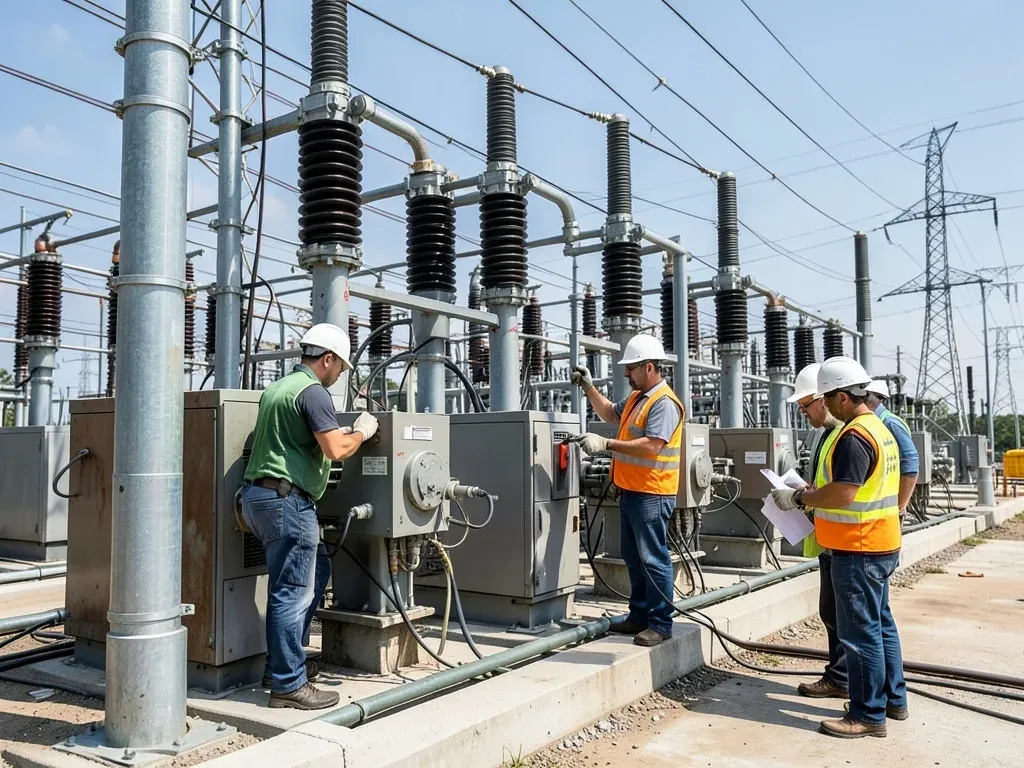
Texas load growth is changing the planning environment
ERCOT’s April 15 preliminary long-term load forecast illustrates why utilities and grid planners are focused on expansion.
ERCOT said its preliminary forecast for 2032 reflects unusually rapid growth in proposed electricity demand and noted that new load is being added to the system faster and in larger amounts than in the past. The forecast is a planning input and includes uncertainty; it should not be read as a guarantee that every requested load will materialize.
CenterPoint had already described a similar direction in its September 2025 investor plan. The company said it expected Houston Electric peak load demand to increase to nearly 31 gigawatts by 2031 and potentially approach 42 gigawatts by the middle of the following decade. Those figures are company forecasts, not completed demand.
For developers, the practical signal is that utility planning is happening in an environment where residential growth, industrial projects, data centers, manufacturing, transportation, and other large loads can compete for infrastructure attention.
That can make the quality and timing of a service request more important. A utility needs enough information to understand what the project is asking for, when it is needed, and whether the load will arrive all at once or in phases.
Define the project’s real load before asking for a date
An early electrical-service conversation is most useful when the load estimate is credible.
A developer may begin with a rough square-foot assumption, but the project should progressively replace that assumption with information from the electrical engineer and major equipment selections. Commercial kitchens, medical uses, laboratories, industrial processes, EV charging, data rooms, large HVAC systems, elevators, refrigeration, and manufacturing equipment can materially change the service requirement.
Owners should ask the design team to identify anticipated service voltage and capacity, connected load and expected demand, major equipment that drives the load, motor starting or other special characteristics, emergency and standby power requirements, phased occupancy or future expansion, temporary construction power needs, and target dates for temporary and permanent energization.
This information should be coordinated with the utility rather than held until construction documents are complete.
A project can also have a mismatch between the load used for early utility discussions and the load that appears in later design. When that happens, the utility may need to revisit assumptions or equipment, which can affect timing.
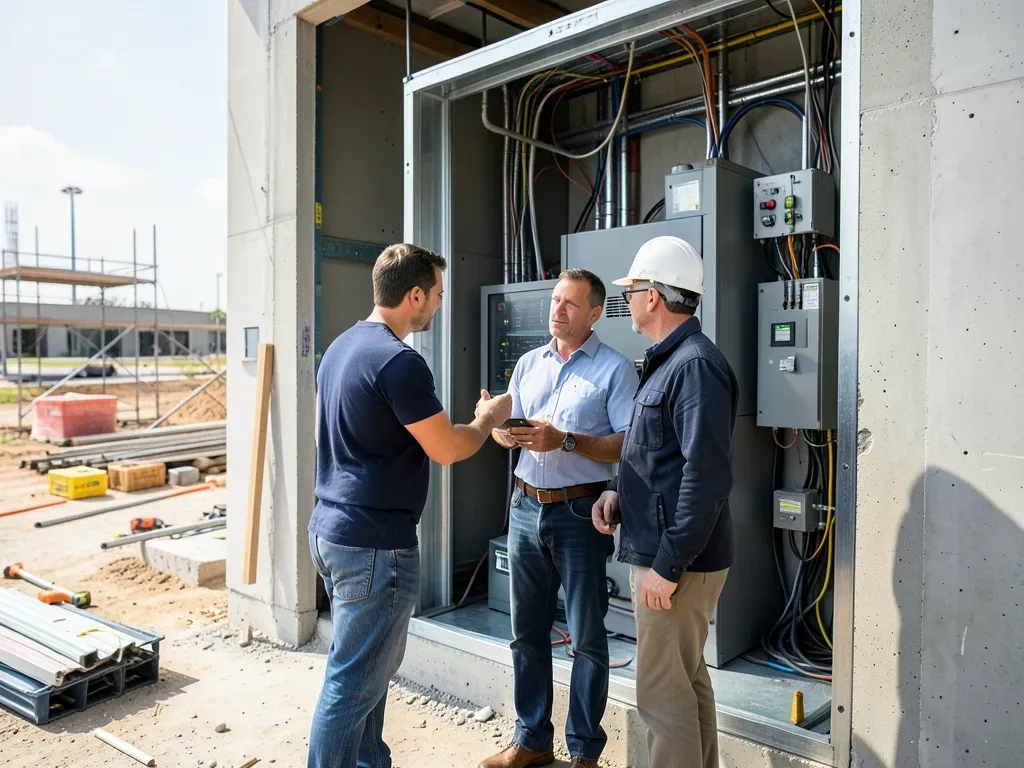
Separate utility work from building electrical work
Owners often talk about “power” as one milestone, but several scopes can sit behind it.
The utility may be responsible for portions of transmission or distribution service, metering, transformer infrastructure, or off-site work depending on the service arrangement. The project’s electrical contractor may be responsible for service equipment, feeders, switchboards, grounding, raceways, and building distribution. Civil work may be needed for duct banks, pads, easements, or access.
Those scopes have to meet at the same point in the schedule.
A useful responsibility matrix identifies who designs, purchases, installs, inspects, and energizes each part of the system. It should also identify which activities depend on utility approval and which can proceed before it.
This is particularly important for equipment with long lead times. A project can finish the building shell and still wait for switchgear, transformers, metering equipment, or utility construction. Conversely, utility work can be ready before the building electrical room is complete.
The owner should look for one integrated energization path rather than separate schedules that happen to end at the same month.
Phasing can reduce the risk of one all-or-nothing date
Projects with multiple buildings or phased occupancy may have more than one way to reach useful power milestones.
A developer might need temporary construction power first, permanent service to an initial building later, and additional capacity for later phases. The feasibility of that approach depends on utility and project conditions, but it is worth testing early.
Phasing can also help separate must-have demand from future demand. If later tenant equipment is not yet defined, the design team can coordinate what infrastructure is needed now to avoid unnecessary reconstruction while still keeping the first phase buildable.
The same concept applies to backup power. Generators or energy storage can support specific resilience or operational needs, but they should not be assumed to replace required utility capacity without engineering and utility coordination.
A project-specific power strategy should therefore connect land development, building phasing, tenant requirements, and utility service rather than treating them as independent decisions.
Keep grid headlines in perspective when underwriting a project
The September 24 award is a real investment signal for Greater Houston. DOE’s national program also reflects a policy focus on expanding grid capacity faster. CenterPoint’s longer-term capital plans and ERCOT’s load forecasts point in the same general direction: more infrastructure is being planned in response to substantial demand growth.
None of those facts provides a project-specific energization date.
When underwriting a development, owners should keep utility assumptions documented. If a pro forma assumes permanent power by a certain month, the project file should show what supports that date: a utility application, study, written correspondence, design milestone, required payment, easement status, equipment lead time, or other evidence.
That makes utility risk visible to lenders, investors, tenants, and the construction team.
The same discipline applies to contingency. A schedule allowance for utility uncertainty is more useful when it is tied to known unresolved items than when it is simply hidden in general float.
Coordinate field conditions with the utility plan
Even after capacity and service concepts are understood, field execution can create constraints.
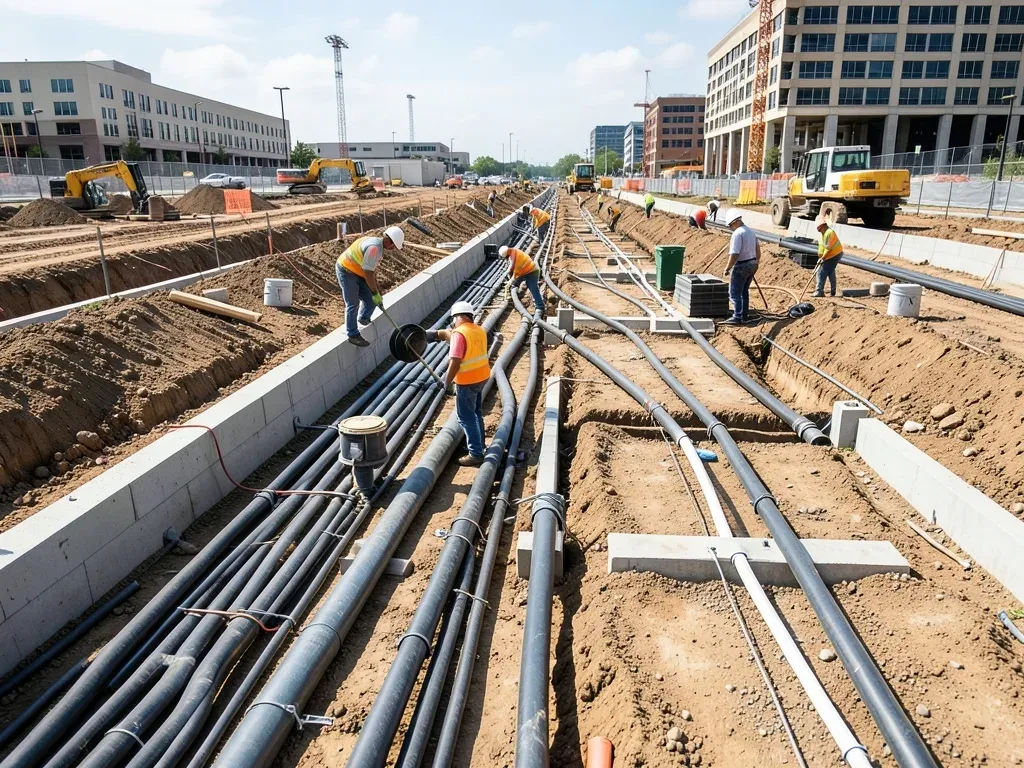
Utility crews may need clear access to poles, underground routes, pads, or substations. Easements must be available. Grades and paving may need to reach a defined condition. Duct banks may require inspection before backfill. Building service equipment must be installed and accepted before energization.
Those conditions should appear in the construction look-ahead.
Temporary power also deserves a transition plan. The project should know when generators, temporary services, or temporary distribution can be removed and what testing or commissioning must occur before permanent systems take over.
What Greater Houston developers should watch next
The most useful follow-up to the September 24 grid announcements is not simply whether more funding is announced.
Developers should watch how regional capacity projects move from selection to final agreements and construction, how local utility investment changes by service area, and how project-specific service timelines respond to continued load growth. CenterPoint stated that its $50 million DOE selection is subject to final negotiations, so the award should not be described as fully completed funding until that process is finalized.
At the project level, the priority remains earlier coordination. Define the load, submit credible information, identify utility and owner responsibilities, track long-lead equipment, protect easements and access, and connect the energization path to the master schedule.
For Greater Houston commercial development, Adila Construction’s commercial construction page describes its published service scope. Owners with a defined site, project type, utility information, and target schedule can use the contact page to share those basics with the team.