
Industry analysis
Houston Biopharma Construction Surge: Owner Signals
Two major Generation Park manufacturing investments are sharpening Houston's life-sciences construction pipeline. Owners should watch utilities, phasing, trades, and commissioning capacity.
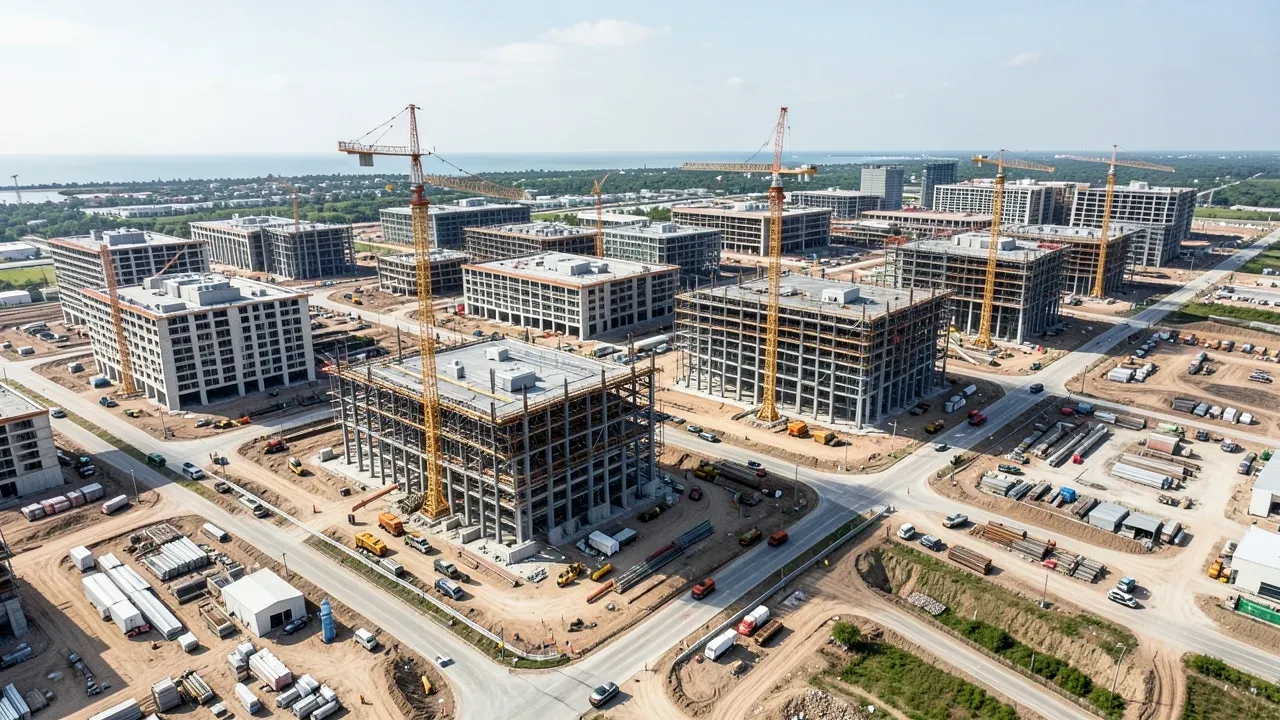
Greater Houston’s advanced-manufacturing pipeline gained another visible milestone on September 21, 2026, when Eli Lilly and Company broke ground on its planned manufacturing site at Generation Park in Harris County. Lilly says the site represents a $6.5 billion investment and will manufacture active pharmaceutical ingredients for small-molecule medicines and advanced therapeutics. The company expects the site to employ more than 600 people.
That event follows Bristol Myers Squibb’s August 10 announcement that it selected Generation Park for an approximately $2.3 billion multi-modal manufacturing campus. BMS describes a roughly 600,000-square-foot campus designed for modular expansion and says it expects nearly 500 initial skilled jobs, plus approximately 2,000 construction and other indirect jobs between 2027 and 2030.
Taken together, the two announcements represent at least $8.8 billion of announced biopharmaceutical manufacturing investment at Generation Park. That figure is a simple sum of company announcements, not a measure of construction spending already in the ground. For Greater Houston owners and developers, the useful signal is that a concentrated cluster of large, utility-intensive, quality-sensitive projects is moving from concept toward execution.
The practical implications extend beyond pharmaceutical developers. Large projects can affect competition for specialty subcontractors, electrical and mechanical capacity, engineering resources, commissioning talent, logistics, and long-lead equipment. Those effects will not be uniform across every Houston project, but they are worth testing in current budgets and schedules.
Generation Park is becoming a deeper advanced-manufacturing node
BMS and Lilly are not describing generic warehouse projects.
BMS says its planned Houston campus will be modular and multi-modal, able to support multiple medicine types and adapt as manufacturing needs change. The company says it selected the region after evaluating factors including the local life-sciences workforce, incentives, utilities, transportation infrastructure, and long-term growth potential. Lilly’s September groundbreaking advances a roughly one-million-square-foot project focused on domestic active pharmaceutical ingredient manufacturing, according to the Texas Governor’s office.
Those facts matter because they show what sophisticated manufacturers are valuing in a Houston-area site: scalable land, utility access, transportation, technical workforce, and the ability to build a campus that can evolve.
For other property owners, the lesson is not that every project should imitate a biopharma campus. It is that site selection and preconstruction increasingly need to test infrastructure capacity before architectural design becomes too fixed.
A large commercial or industrial owner can ask:
- Is electrical service available at the required capacity and on the required date?
- Are water and wastewater assumptions confirmed?
- Does the site allow future phases without disrupting the first operating phase?
- Can heavy equipment and major deliveries reach the site efficiently?
- Are utility corridors protected for expansion?
- Is there enough staging and laydown space for the proposed sequence?
- Which off-site improvements depend on agencies or utility providers?
These questions are familiar, but projects of this scale make the cost of a wrong assumption more visible.
Utility planning can become an early schedule gate
Advanced manufacturing facilities can place significant demands on electrical, mechanical, water, process, and control systems. The exact loads for the new Houston projects are not fully described in the public announcements, so project-specific assumptions should not be inferred from the investment totals.
The broader construction signal is still clear: when multiple large campuses advance in the same submarket, utility planning and specialty infrastructure can become more important to regional project schedules.
BMS explicitly cited proximity to utilities and transportation infrastructure as factors in selecting Generation Park. That reinforces a useful owner practice: separate “utility available near the site” from “utility capacity and delivery date confirmed for the project.”
Those are not the same condition.
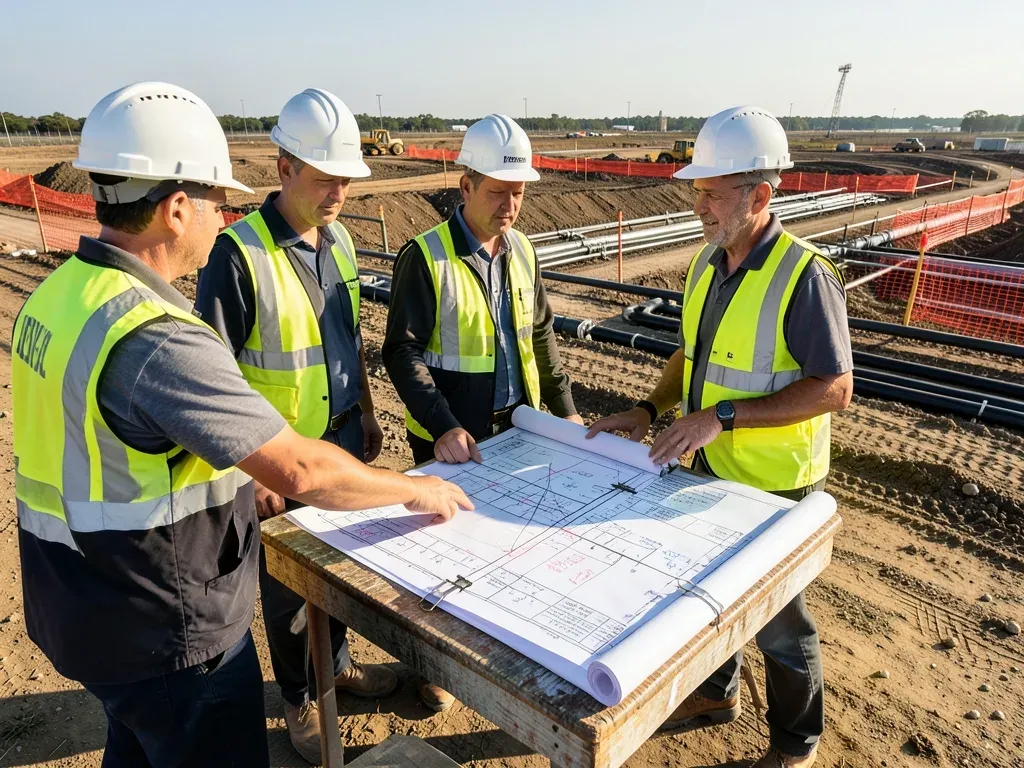
During due diligence, owners should identify the service request, responsible utility, required studies, easements, off-site improvements, equipment lead times, and construction responsibilities. The schedule should show those items as real activities with owners and dates rather than one general “utility coordination” line.
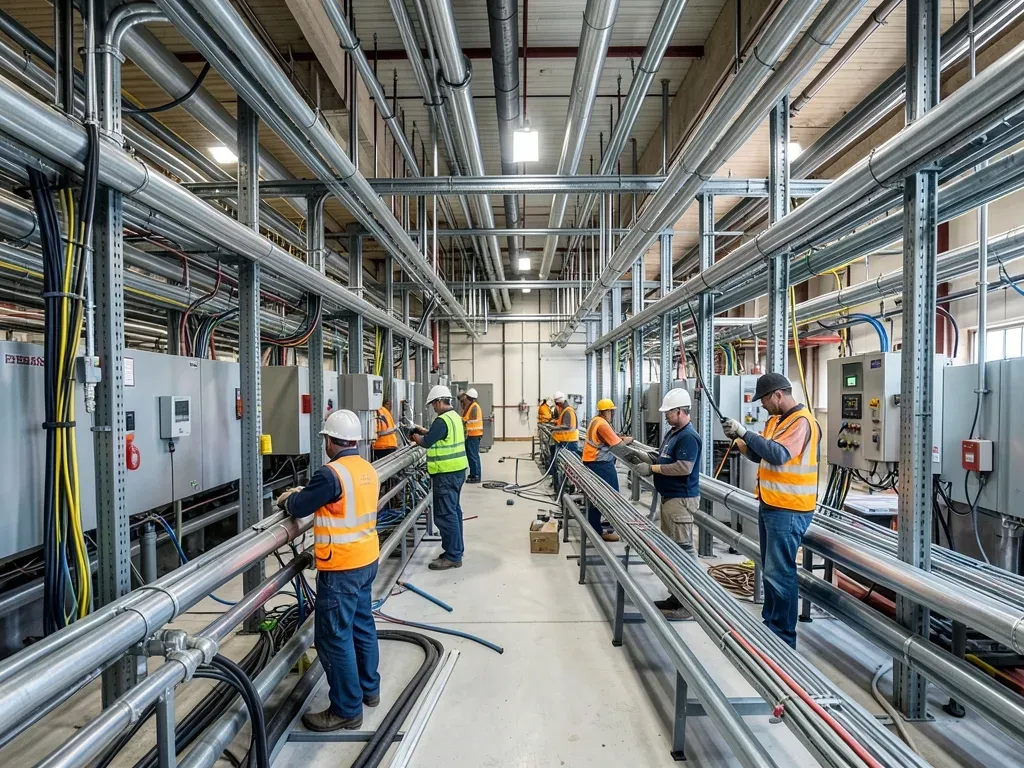
Electrical equipment deserves the same treatment. A project may require transformers, switchgear, generators, motor-control centers, drives, controls, and other equipment with design and procurement dependencies. The optimal release date depends on design maturity, vendor terms, storage, and the risk of later changes.
For owners outside life sciences, the same discipline applies to commercial, multifamily, or other industrial work. Utility uncertainty can delay a project even when the building package itself is ready.
Specialty-trade capacity should be tested, not assumed
BMS’s announcement says the Houston campus is expected to support about 2,000 construction and other indirect jobs during 2027–2030. Lilly’s site adds another major project to the same area, and the company has announced a workforce-training partnership with San Jacinto College.
Those facts point to a growing regional demand for technical labor, but they do not prove that every Houston trade will become constrained.
The likely pressure is more selective.
Complex manufacturing campuses can require strong mechanical, electrical, controls, instrumentation, process-piping, clean or controlled environments, quality documentation, testing, and commissioning resources. Some of those capabilities overlap with contractors serving hospitals, laboratories, data centers, energy facilities, and sophisticated commercial work.
For an owner, the practical response is to ask bidders about the people behind the schedule.
A proposal should be evaluated not only on price but also on the planned superintendent team, trade partners, crew availability, specialty vendors, and commissioning resources. If a bidder expects the same subcontractor to staff several large Houston projects at once, that is a capacity question worth understanding before award.
Owners can also consider early trade engagement where the project justifies it. Bringing critical mechanical, electrical, or controls partners into design coordination can expose constructability, equipment, and sequencing issues before the documents are complete.
Modular growth changes how owners can think about phasing
BMS describes its Generation Park campus as modular, with the ability to add and reconfigure manufacturing capacity over time. That is a company-specific design strategy, but it highlights a broader development principle: an owner can preserve future growth by making expansion part of the first-phase infrastructure plan.
A phased campus should consider more than where a future building might sit.
The first phase can affect future utility loops, road circulation, stormwater systems, central plants, fire access, security, loading, temporary construction access, and shutdown requirements. If those systems are sized or located only for the first opening day, a later phase may require expensive disruption.
For commercial and multifamily developers, the same idea applies at a different scale. A shell building may need capacity for future tenants. A multifamily development may open in phases. A business park may add buildings over time. Early decisions about underground utilities, access, and shared infrastructure can either preserve or reduce future options.
The lesson from the new Houston manufacturing investments is not “build everything larger.” It is to identify which future conditions are credible enough to protect now and which should remain flexible.
Commissioning and turnover deserve front-end attention
Quality-sensitive manufacturing projects typically put heavy emphasis on testing, verification, controls, documentation, and turnover. The public releases do not provide detailed commissioning plans for the Houston sites, so no project-specific process should be assumed.
For owners generally, however, the growth of complex facilities is a reminder that turnover is increasingly a production phase of its own.
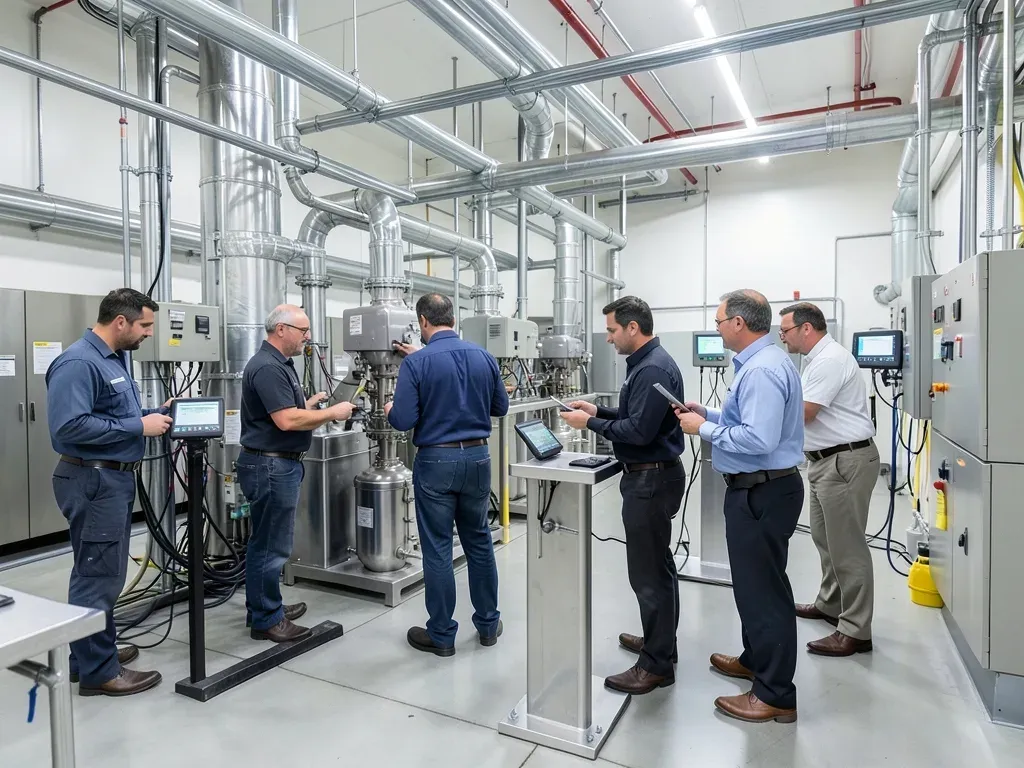
The construction schedule should distinguish physical installation from startup, testing, controls integration, owner training, punch work, documentation, and final acceptance. If those activities are compressed into the last few weeks, the project can appear “nearly complete” while still being far from operational.
The same principle applies to ordinary commercial work. Air balancing, fire alarm testing, controls programming, equipment startup, inspections, owner training, and closeout documents can all affect occupancy or use.
Owners can improve predictability by identifying commissioning and turnover requirements during design and procurement. Vendors should know what documentation is required. Trade scopes should state who starts equipment, who tests interfaces, and who closes deficiencies. The baseline schedule should reserve time for the process.
Large investments can reshape procurement without moving every price
Two large Generation Park projects may influence Houston construction markets, but owners should avoid turning the announcements into a blanket escalation assumption.
A project several miles away may use different trades, materials, delivery windows, and equipment. A renovation can be less exposed to campus-scale infrastructure demand than a large ground-up industrial project. Conversely, a small project can still compete for the same electrical, mechanical, controls, or commissioning specialists.
The better approach is package-level market testing.
Owners can ask the general contractor which trades are seeing backlog, which equipment is receiving longer quotations, where bid participation is narrowing, and whether specific subcontractors are committed to other major work. Those questions should be refreshed during preconstruction because market capacity can change as the new campuses move from design to procurement and field activity.
Bid leveling is useful here. A higher price may reflect genuine capacity pressure, but it may also reflect a scope difference, schedule assumption, or risk allowance. Normalizing bids helps separate those issues.
What Greater Houston owners should watch next
The September 21 Lilly groundbreaking and the August BMS site announcement provide current evidence that Houston is attracting large-scale biopharmaceutical manufacturing investment. The two projects are at different stages and have different technical programs, so they should not be treated as one combined construction project.
For owners elsewhere in Greater Houston, five planning signals are worth carrying forward.
First, confirm utility capacity and timing early. Second, preserve expansion options intentionally rather than accidentally. Third, test specialty-trade capacity behind the proposed schedule. Fourth, connect long-lead procurement to design maturity. Fifth, plan startup and turnover as real schedule phases.
These are analysis points, not forecasts that every Houston project will face the same conditions. The effect should be verified against the property’s location, scope, subcontractor market, and procurement plan.
Adila Construction’s commercial construction page describes its published commercial service scope. Owners with a defined site, project type, available drawings, and target timing can use the contact page to share those basics with the team.