
Industry analysis
Houston Construction Labor Market: Fall 2026 Signals
Houston construction employment has remained strong while Texas and national labor data show a more mixed backdrop. Here is what owners should test in bids and schedules.
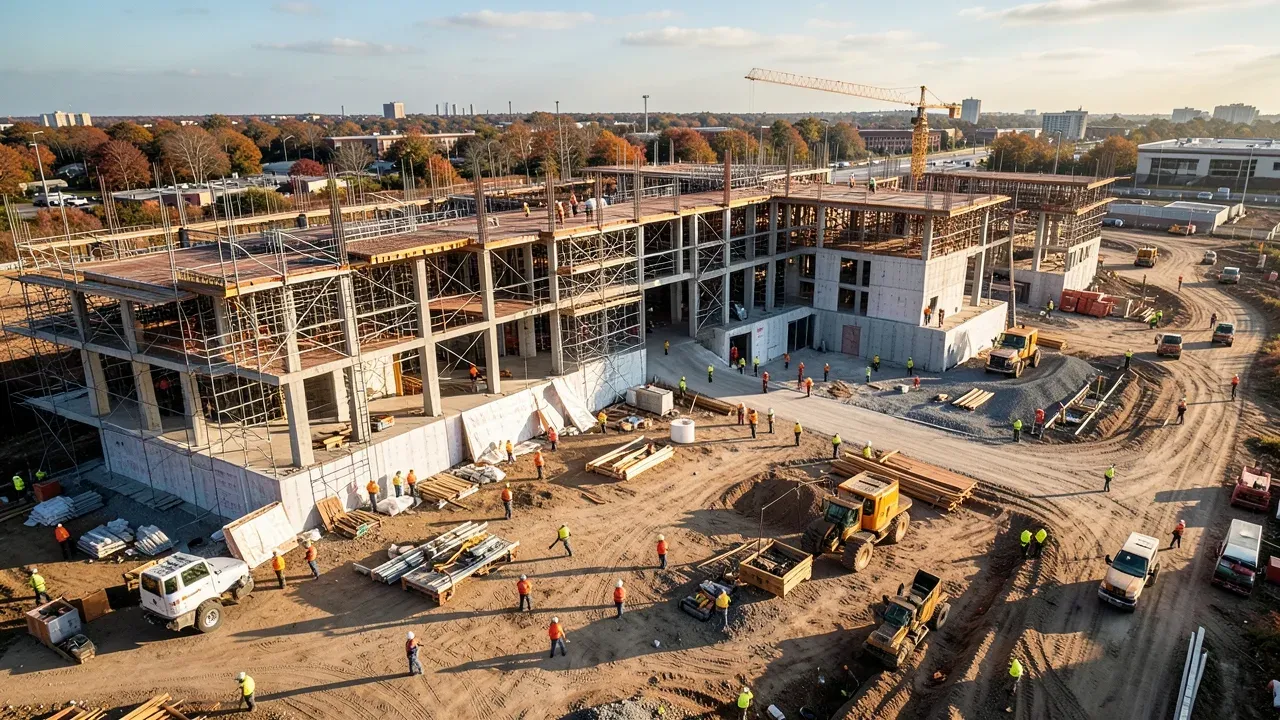
The latest labor data present a mixed picture for construction decision-makers in Greater Houston. Local construction employment was growing quickly through July, while the broader Texas employment outlook softened and statewide unemployment remained above the national rate in August. National payroll growth accelerated in August, but the gains were concentrated in a handful of industries.
For an owner or developer, those signals do not answer a simple question such as whether labor will be easy or difficult to find. They do something more useful: they show why project teams should test subcontractor capacity, supervision, crew assumptions, and schedule logic instead of applying one broad labor-market story to every trade.
The Federal Reserve Bank of Dallas reported on September 4 that Houston payrolls grew at a 2.1 percent annualized rate over the three months ending in July 2026. Construction led the local gains, growing at a 10.4 percent annualized rate over that period, or about 6,500 jobs. The same report said Houston construction employment was up 5.2 percent year over year in July. Those figures point to active local construction hiring, but they do not prove that every trade is tight or that every contractor has the same backlog.
Houston construction employment has been a local strength
The Dallas Fed’s latest Houston dashboard describes a local labor market that was still expanding through July, with construction making the strongest contribution among major sectors. That matters because Greater Houston owners are buying work in a market where active projects compete for field supervision, skilled trades, equipment operators, and specialty crews.
A growing construction workforce can be read in two ways. On one hand, it suggests that the region is attracting and employing more construction labor. On the other, strong job growth can accompany a high level of project activity, which means available workers may already be committed to ongoing jobs.
Owners should therefore avoid translating employment growth directly into either “plenty of labor” or “labor shortage.” The more practical question is whether the specific subcontractors bidding the project can staff the promised sequence.
That requires trade-level information. Concrete, electrical, mechanical, drywall, roofing, civil work, finishes, and specialty systems can each have different capacity conditions. A contractor with a strong overall workforce can still have a constraint in one critical trade or one level of supervision.
A useful bid review should ask:
- Which crews are assumed for the baseline schedule?
- Are those crews already committed to another project?
- How many foremen and superintendents are included?
- Which scopes depend on a small number of specialty workers?
- Does the subcontractor intend to self-perform or rely on lower-tier labor?
- What production rate is assumed for the critical activities?
Those questions turn a broad labor-market indicator into project-specific schedule evidence.

Texas and national data are more mixed
The statewide backdrop is less uniformly strong than Houston construction’s recent local numbers.
The U.S. Bureau of Labor Statistics reported that Texas had a seasonally adjusted unemployment rate of 4.4 percent in August 2026. The national rate in the same release was 4.1 percent. These are broad labor-force measures, not construction-specific availability indicators, and the August state estimates are preliminary.
The Dallas Fed’s August 21 Texas employment forecast also softened. It projected 1.7 percent Texas job growth for 2026 and noted that July employment losses were concentrated partly in construction, along with financial activities and manufacturing. At the same time, Dallas Fed economists said year-to-date Texas job growth had remained resilient despite labor-supply constraints.
National payroll data add another layer. BLS reported that total nonfarm employment rose by 162,000 in August, following a much smaller July increase. The August gains were not evenly distributed across industries; food services, local government education, manufacturing, and health care were among the areas highlighted by BLS, while information employment declined.
Taken together, these releases argue against a single labor narrative. Houston construction had strong recent growth, statewide conditions were moderating, and national hiring was uneven. For Greater Houston projects, that means owners should use local bids, subcontractor commitments, and schedule evidence as the primary decision inputs while treating macro labor data as context.
Test subcontractor capacity before accepting a schedule
A baseline schedule is only as credible as the resources behind it.
When an owner reviews a proposed construction duration, the schedule may show logical relationships between activities but say little about whether the required crews will actually be available at the planned times. That gap becomes more important when local construction activity is strong.
One practical improvement is to connect key schedule activities to manpower assumptions. The project does not need a detailed labor histogram for every minor task, but critical trades should have a reasonable resource story.
For example, if a large interior buildout depends on several floors progressing at once, the team should understand whether the drywall and MEP subcontractors intend to staff multiple work fronts. If paving must occur within a narrow turnover window, the civil contractor’s backlog and crew availability matter. If electrical gear arrives late, the electrical subcontractor may need to compress installation and testing into a shorter period.
Owners can also compare staffing assumptions across bidders. A materially shorter schedule may be based on more crews, more overtime, different sequencing, or simply a more optimistic production rate. The bid review should identify which one.
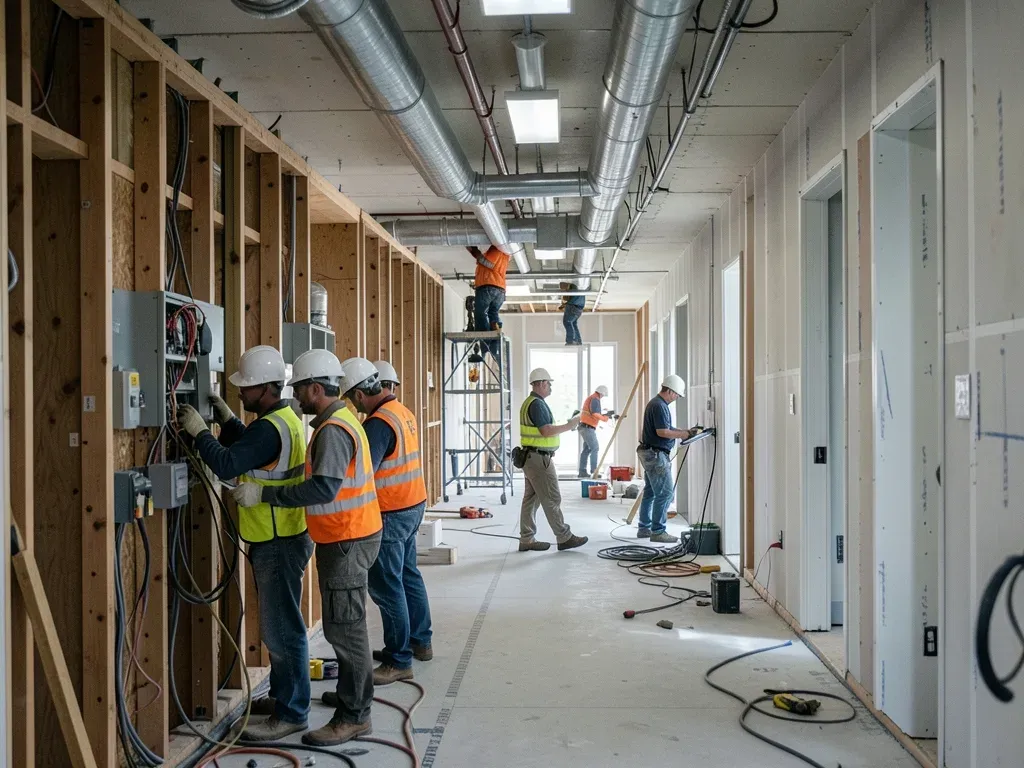
This is not a reason to distrust an aggressive schedule. It is a reason to understand what must be true for that schedule to work.
Look beyond hourly wage assumptions
Labor risk is broader than a wage rate.
A project can experience labor-related cost pressure through overtime, supervision, remobilization, reduced productivity, rework, travel, shift work, or the need to bring in specialty crews. Those costs may not appear clearly in a simple unit labor rate.
Owners should therefore review how the estimate and schedule interact. If a subcontractor plans overtime to meet a milestone, the pricing should reflect it. If a scope depends on weekend or night work, access and supervision should be considered. If a project is phased around occupied areas, repeated mobilization can reduce productivity.
The Dallas Fed’s Houston report also noted rising input-price measures, so labor is not the only cost variable active in the market. A project team should avoid solving a labor issue in a way that creates a material or schedule problem elsewhere.
Prefabrication can help some scopes by shifting work into more controlled environments, but it is not a universal labor solution. Early procurement can protect a schedule, but it can also create storage and design-lock risks. Adding crews can accelerate work only when the site, supervision, inspections, and preceding activities are ready to support them.
The most useful owner question is therefore: “What resource or predecessor actually controls this activity?” That keeps labor decisions tied to the real critical path.
Use bid leveling to expose capacity assumptions
Labor-market uncertainty makes bid leveling more valuable.
Two subcontractors can price the same drawing set using different crew sizes, production assumptions, exclusions, supervision levels, overtime assumptions, and start dates. Comparing only the bottom-line price can hide those differences.
A normalized review should examine scope coverage and schedule commitment together. Owners and general contractors can ask bidders to clarify:
- earliest realistic mobilization date;
- anticipated crew size;
- supervision included in the price;
- normal working hours;
- overtime assumptions;
- major lower-tier subcontractors;
- known backlog constraints;
- duration for critical work;
- exclusions tied to access, phasing, or acceleration.
This information also helps identify concentration risk. If several critical scopes depend on the same limited pool of specialty labor, the schedule may need more float or earlier commitments.
The goal is not to demand guarantees about future labor conditions. It is to make the assumptions visible enough that the owner can compare bids on a consistent basis.
Protect the schedule with realistic checkpoints
Labor availability can change between bid day and the date a trade actually mobilizes.
For that reason, capacity should be revisited at key project checkpoints rather than checked once during procurement. Preconstruction, subcontract award, long-lead release, mobilization, and major phase transitions are useful moments to confirm that staffing assumptions still match the plan.
A look-ahead schedule can make this practical. When a critical trade is four to six weeks from starting, the superintendent can confirm crew availability, predecessor completion, material readiness, access, inspections, and any owner decisions required for the work to begin.
If a capacity problem appears, earlier visibility creates more options. The contractor may be able to resequence work, add a second crew, shift a work area, approve overtime, engage another qualified subcontractor, or move noncritical activities without disrupting the final milestone.
Read the data as context, not a bid forecast
The newest labor releases are useful because they show different layers of the market.
Houston construction employment was growing strongly through July. Texas unemployment was 4.4 percent in August, and the Dallas Fed’s statewide forecast had softened. National payroll employment improved in August, but the gains were uneven by industry. None of those facts predicts the crew availability or price for a specific Houston project.
Owners should use the data to sharpen questions: Which trades are seeing backlog? Which bids depend on aggressive staffing? Which activities have little float? Where would a labor delay create the largest cost impact? Which subcontractors have already committed resources?
The answer should come from current project evidence.
For owners evaluating construction in Greater Houston, Adila Construction’s services overview describes its published commercial, multifamily, residential, and remodeling categories. When a project has a defined property, scope, available drawings, and target timing, the contact page provides a direct route to share those basics with the team.