
Industry analysis
Houston Build-to-Rent Construction: Fall 2026 Signals
A new Richmond build-to-rent project and mixed national housing data offer practical signals for Greater Houston developers evaluating rental-home construction.
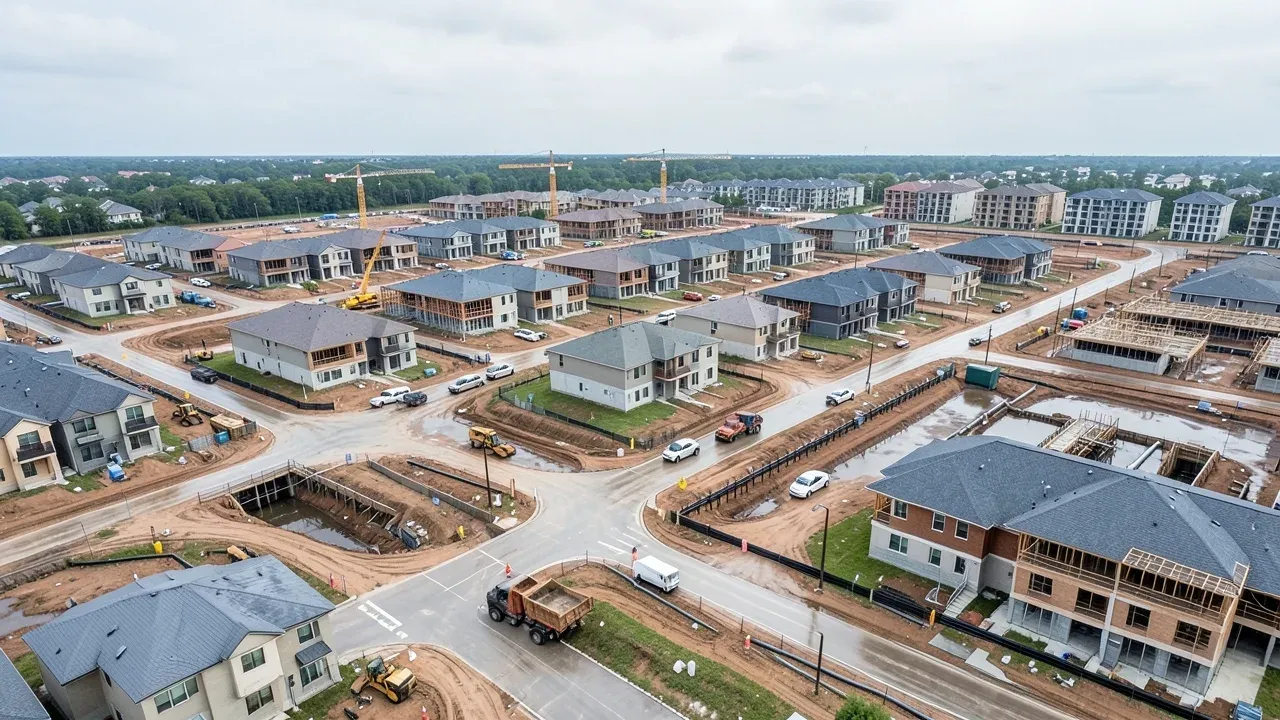
A new build-to-rent project in Richmond offers a useful snapshot of how Greater Houston residential development is evolving, but owners should be careful not to turn one announcement into a market forecast.
Bisnow reported on September 24 that AiWB, a construction-technology platform developed by Wan Bridge, had started development of Cadia Grand Court, a 144-home build-to-rent community in Richmond. The report says the community is expected to open in late 2027 and that the platform is intended to connect planning, scheduling, procurement, project management, and field operations.
That local project arrives while national residential indicators are mixed. The U.S. Census Bureau reported that overall housing starts declined in August, even as single-family starts increased from July. The National Association of Home Builders reported a further decline in builder sentiment in September as higher interest rates, labor shortages, and material costs weighed on respondents.
For Greater Houston developers, those facts point to a planning environment in which execution matters as much as headline demand. Build-to-rent projects combine horizontal development, repeated vertical construction, leasing strategy, long-term ownership assumptions, and a large number of similar but not identical units. The opportunity is real, but so is the need for disciplined phasing and cost control.
A Richmond project puts process technology in view
Bisnow’s September 24 report describes Cadia Grand Court as a 144-home build-to-rent community in Richmond and says the project is expected to open in late 2027. It also says the developer’s AiWB platform is being used to support planning, scheduling, procurement, project management, and field operations.
The important signal for other owners is not that every build-to-rent project should buy or build an AI platform. It is that repetitive residential construction creates a strong incentive to connect information across land planning, procurement, production, and field execution.
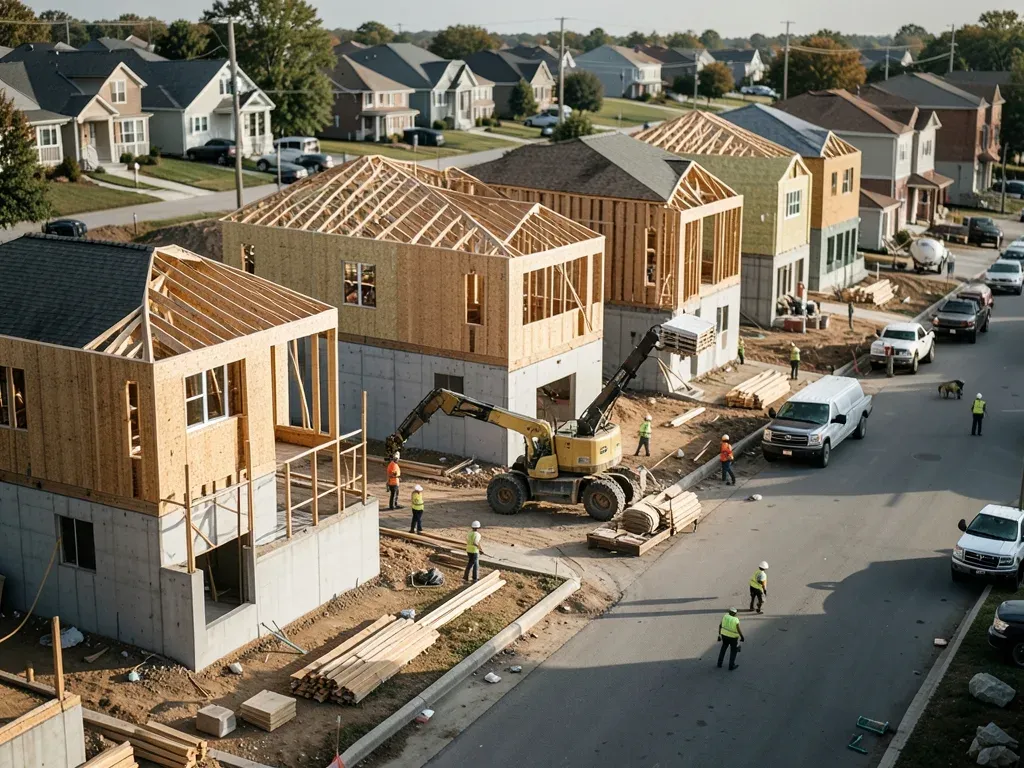
A build-to-rent community may repeat floor plans, structural details, finish packages, and trade scopes. That repetition can create purchasing leverage and learning effects, but only if the project team controls revisions. If one unit type changes after procurement, the effect can repeat across dozens of homes. If one trade falls behind, the delay can propagate through multiple lots.
Owners evaluating construction technology should therefore ask measurable questions. Does the system reduce schedule handoffs? Does it improve purchase-order visibility? Does it identify late selections? Does it show unit-by-unit progress accurately? Can the field team use it without duplicating data in another system?
National housing data are mixed, not a BTR forecast
The Census Bureau’s September 17 release reported total privately owned housing starts at a seasonally adjusted annual rate of 1.275 million in August, down 2.6 percent from the revised July rate. Within that total, single-family starts were 918,000, up 7.6 percent from revised July. Single-family building permits were 878,000, down 1.8 percent from July.
Those national figures do not isolate build-to-rent housing, and they do not describe Greater Houston conditions directly. They are still useful because they show that residential construction is not moving in one direction across all measures.
For a Houston-area build-to-rent developer, the better question is how national conditions interact with local evidence. Site-specific feasibility should consider land basis, utility capacity, civil costs, property taxes, insurance, rental competition, local household growth, capital structure, and achievable rents. National starts can influence the broader supply chain and builder capacity, but they should not substitute for a local rent study or development budget.
The same caution applies to a single local project announcement. A 144-home community starting in Richmond demonstrates that capital and construction activity are still moving in the asset class. It does not prove that every Houston suburb can support the same product, density, rent level, or delivery schedule.
Financing and cost pressure still shape feasibility
NAHB reported on September 16 that its Housing Market Index fell three points to 32 in September. The association attributed weaker sentiment to higher mortgage rates, labor shortages, rising material costs, tight lending conditions, and elevated land and construction costs. NAHB also reported greater use of price reductions and sales incentives among surveyed home builders.
The HMI is focused on newly built single-family for-sale housing, not build-to-rent. Even so, several pressures identified by builders overlap with BTR development: land cost, construction cost, labor availability, financing conditions, and buyer or renter affordability.
For build-to-rent owners, the capital structure changes the way those pressures appear. A rental community may not depend on selling each home at completion, but it still depends on the relationship among development cost, lease-up pace, operating expenses, rents, and financing. A higher construction budget can require more equity, a different loan structure, lower land basis, revised unit mix, or a stronger operating case.
That makes contingency management important. Instead of carrying one undifferentiated contingency percentage, owners can track risks by category: site work, utility extensions, off-site improvements, material escalation, labor, design completion, permitting, owner selections, and financing duration.

Repetition makes phasing a construction decision
Build-to-rent communities are often discussed as a real-estate product, but phasing is also a field-production decision.
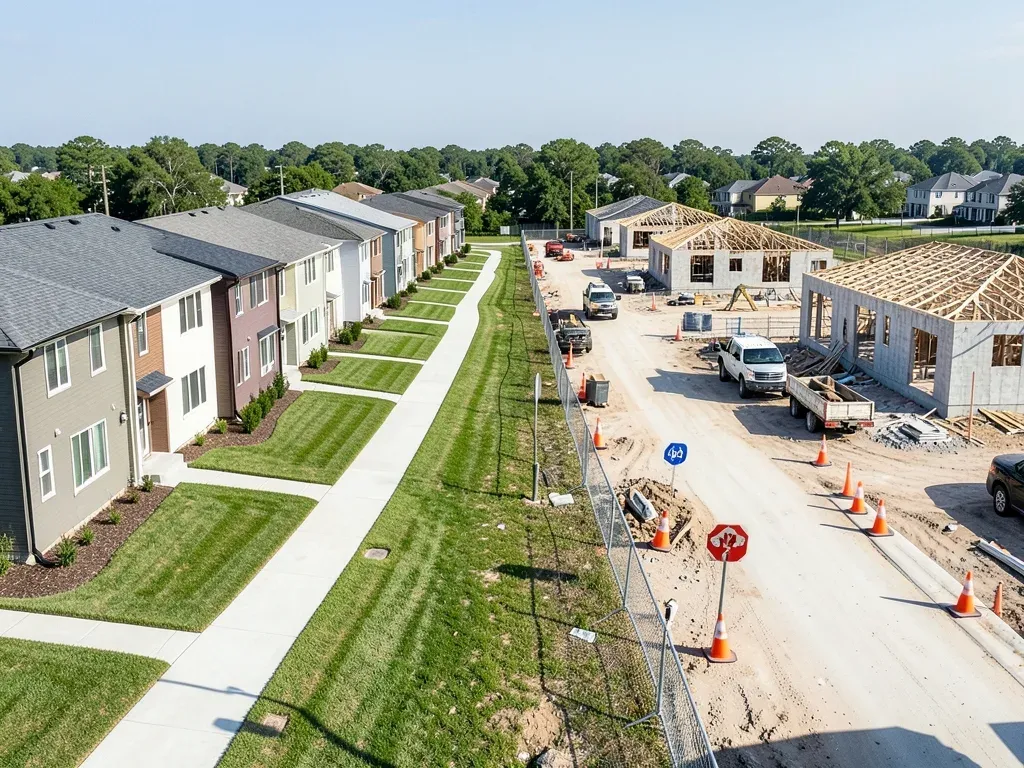
The project may include roads, drainage, utilities, amenities, model units, leasing areas, multiple home types, and landscaped common spaces. Horizontal work has to create buildable lots in the right sequence. Vertical crews need enough repetition to maintain production without stacking too many trades in one area. Completed units may need protected access while later phases remain active construction zones.
An owner can test the phase plan against several practical questions:
- How many lots must be ready before vertical construction starts?
- Which utilities must be permanent before leasing or occupancy?
- Can delivery traffic reach later phases without crossing occupied areas?
- Where will materials be staged as completed units reduce available space?
- Does the amenity schedule support leasing, or does it compete with critical site work?
- How many unit types can the trade base execute efficiently at one time?
- What happens if lease-up is slower or faster than the construction plan assumes?
Those questions connect the pro forma to the superintendent’s sequence. A phase that looks efficient in a spreadsheet can become expensive if crews repeatedly remobilize, temporary access must be rebuilt, or finished areas are exposed to construction traffic.
Procurement discipline matters more when designs repeat
Repeated plans can improve purchasing efficiency, but they also magnify procurement mistakes.
A late appliance substitution, unavailable finish, electrical equipment delay, or window change can affect many units. Owners should know which items are standardized, when purchasing decisions become fixed, which alternates have been reviewed, and how long-lead items are tied to the release schedule for each phase.
This is where technology can help, but only if the underlying process is clear. A digital procurement dashboard cannot compensate for an undefined approval workflow. The project team still needs a controlled list of approved products, responsible decision-makers, required dates, and a method for communicating changes to design, purchasing, and field teams.
The best use of project data is often early warning. If the system shows that a recurring material package will miss three future buildings, the team has time to evaluate alternatives before the shortage becomes a field stop.
What Greater Houston owners should test before committing
The Richmond project and September housing data suggest a market that rewards selective, project-specific planning rather than broad assumptions.
Before committing to a build-to-rent construction program, Greater Houston owners can test the site and delivery model across four dimensions. First is infrastructure: drainage, utilities, access, detention, and off-site requirements. Second is product: unit mix, parking, private outdoor space, common amenities, and maintainability. Third is production: phasing, trade capacity, procurement, quality control, and turnover. Fourth is economics: land basis, capital cost, contingency, operating expenses, expected rents, and lease-up assumptions.
The construction team should be involved early enough to challenge the sequence and cost assumptions, but market decisions remain the owner’s responsibility. National data can help frame questions; local rent and demand studies should answer them.
Read the signal, not the headline
Cadia Grand Court is a current example of build-to-rent development moving forward in the Houston region with an explicit emphasis on connected construction technology. Census and NAHB data, meanwhile, show a national housing environment with mixed production signals and continued cost and financing pressure.
Taken together, the practical message is not “build” or “wait.” It is to make the construction model testable before capital is committed. Owners should know how the site will phase, where cost exposure sits, which procurement decisions control production, and what schedule assumptions depend on local trade capacity.
For projects that combine multiple residential units and shared infrastructure, the multifamily construction page provides context on Adila Construction’s published service scope. For lower-density residential work, see the residential construction page. When a site, concept, and target schedule are defined, the contact page is the appropriate place to share project information.