
Construction guide
Houston Construction Stormwater Planning Guide
A practical Greater Houston guide to construction stormwater coverage, SWP3 planning, erosion controls, inspections, and project closeout before soil is disturbed.
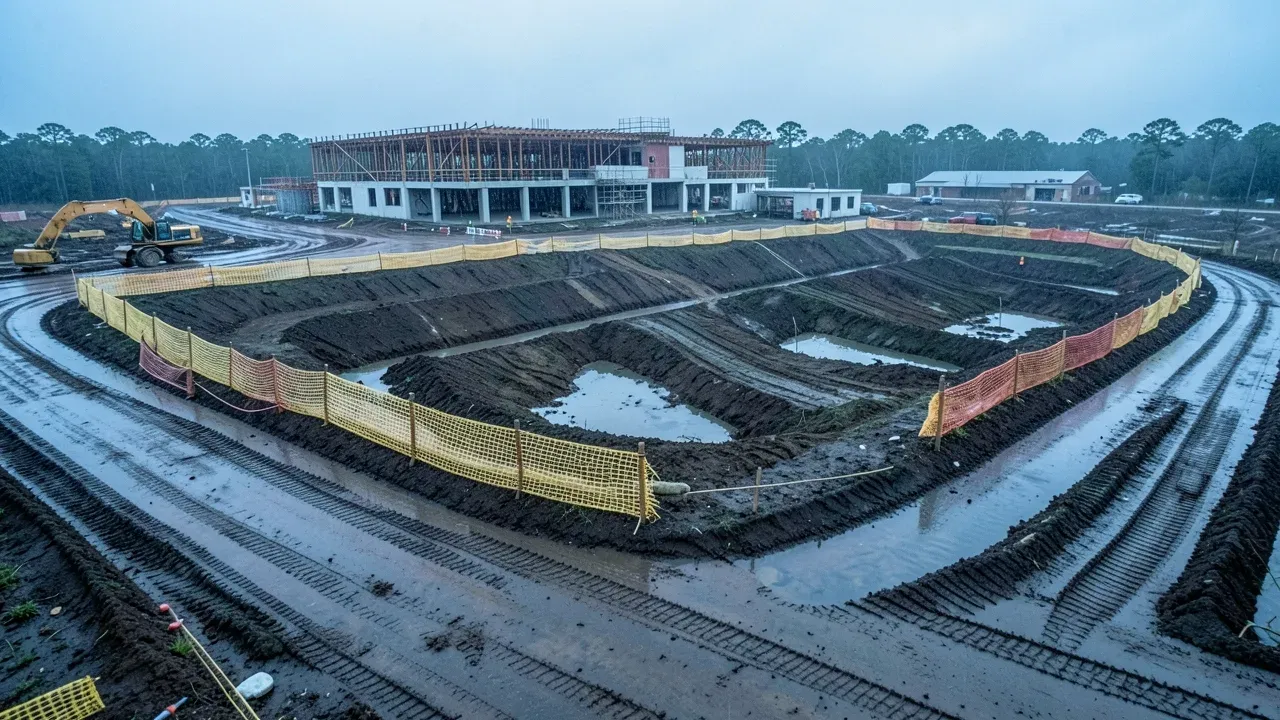
Stormwater planning can look like a narrow environmental task, but on a construction project it touches site access, earthwork, temporary drainage, material storage, inspection routines, and closeout. For Greater Houston owners and developers, that makes it a preconstruction coordination issue rather than paperwork to leave until crews are ready to disturb soil.
Texas regulates qualifying construction-stormwater discharges through the Texas Commission on Environmental Quality’s Construction General Permit, TXR150000. The 2023 permit became effective March 5, 2023 and runs through March 5, 2028. It distinguishes small and large construction activities based on disturbed acreage and also considers whether a project is part of a larger common plan of development or sale. The permit requires covered operators to use a Stormwater Pollution Prevention Plan, commonly called an SWP3, and to implement controls that reduce pollutants in stormwater runoff.
The federal framework reinforces the same management principle: construction stormwater should be controlled through planning, erosion and sediment controls, pollution-prevention practices, inspections, corrective actions, and stabilization. This guide focuses on how owners can organize those responsibilities. It is not a substitute for project-specific environmental, civil-engineering, or legal advice.
Confirm the coverage path before site disturbance
The first useful question is not “Do we have an SWP3?” It is “What stormwater authorization, if any, applies to this project and who is the operator responsible for it?”
Under the current Texas construction general permit, construction activity that disturbs at least one acre can be regulated when stormwater discharges to surface water in the state. A project disturbing less than one acre can also fall within the permit when it is part of a larger common plan of development or sale that will disturb one acre or more. Large construction activity generally involves five or more acres of disturbance; small construction activity generally involves at least one but less than five acres. The permit sets different authorization and notice requirements depending on the project category.
Owners should resolve this question while the civil design and site logistics are still being developed. Waiting until mobilization can create avoidable confusion over notices, operator roles, sequencing, and required controls.
A useful preconstruction record should identify the anticipated disturbed acreage, whether the work is part of a larger development plan, where runoff is expected to leave the site, the parties that meet the permit’s operator definitions, and the authorization steps assigned to each party. If the project has multiple contractors or phases, the team should also confirm whether responsibilities change as work progresses.
The point is not for an owner to make a regulatory determination alone. The point is to make the determination visible, documented, and assigned before earthwork begins.
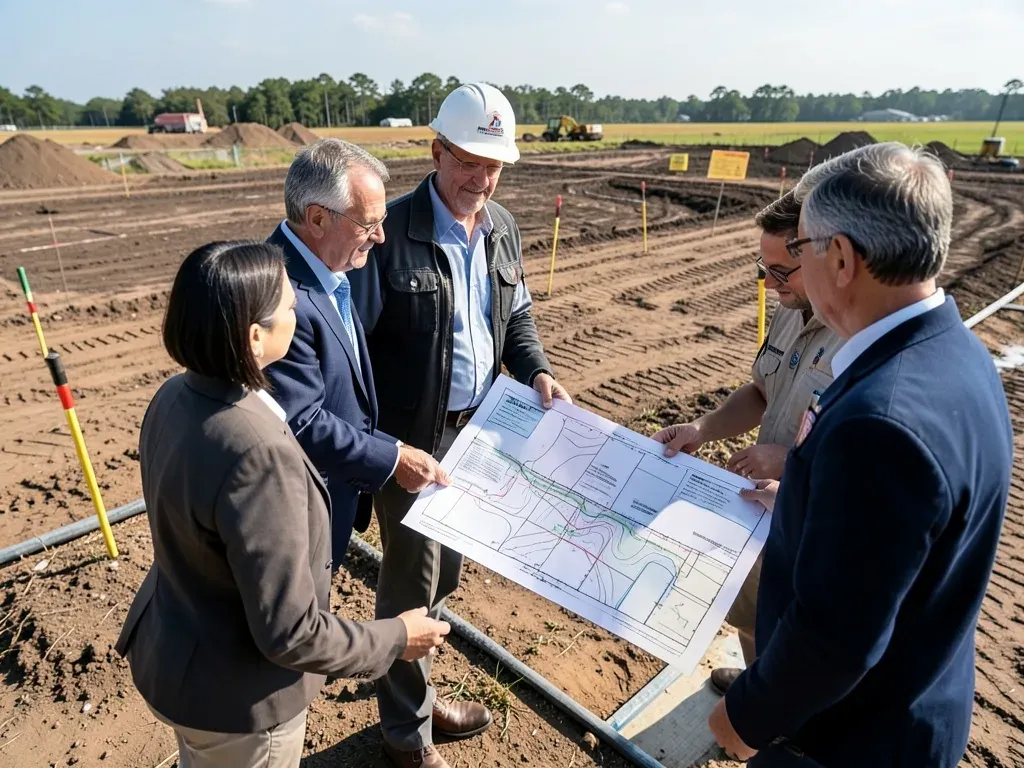
Build the SWP3 around the actual construction sequence
An SWP3 should describe the site that will actually be built, not a generic collection of erosion-control details.
The Texas permit requires a covered project to develop and implement an SWP3 before construction begins. In practical terms, that plan needs to connect the proposed controls to the site’s drainage patterns, soil disturbance, construction phases, material handling, and discharge points. It should also be updated when conditions change in a way that affects stormwater controls.
That matters because construction sites are dynamic. Clearing can expose soil that was previously stabilized. Utility trenches can interrupt drainage. Temporary stockpiles can redirect runoff. Building pads and paved areas can change the direction and speed of water. A control that worked during mass grading may be poorly located after curbs, paving, or permanent drainage structures are installed.
Owners can improve coordination by asking the project team to review the SWP3 against the baseline schedule. Major phases worth checking include clearing, rough grading, underground utilities, foundations, vertical construction, paving, landscaping, and final stabilization.
The plan should also distinguish temporary measures from permanent features. Silt fence, stabilized construction entrances, inlet protection, sediment traps, diversion berms, temporary seeding, and similar practices are construction-phase tools. Permanent drainage and water-quality facilities belong to the finished development and should be coordinated with the civil design.
When the SWP3 and construction schedule tell the same story, inspection and corrective-action decisions are easier to manage.
Treat erosion controls as maintained systems
Installing a control does not finish the job. Controls need to remain functional while the site changes around them.
Construction entrances can become tracked with mud. Inlet protection can clog. Silt fence can be damaged by equipment. Sediment can accumulate in traps. Diversions can be cut by utility work. Temporary stabilization can fail after heavy rainfall or repeated traffic.
For that reason, field responsibility should be explicit. The superintendent or designated stormwater lead should know who performs inspections, who records findings, who directs corrective work, and how quickly deficiencies are addressed under the permit and project requirements.
A practical inspection routine should look beyond whether a device is physically present. It should ask whether runoff is bypassing the control, whether sediment is leaving the site, whether discharge points show signs of erosion, whether construction materials are exposed to rainfall, and whether site changes require the SWP3 to be revised.
Greater Houston’s intense rainfall potential makes this especially important. Even when a project is not facing tropical weather, a localized downpour can test temporary drainage and sediment controls quickly. The project team should therefore connect weather monitoring to inspection readiness without assuming that a stormwater plan is only relevant during hurricane season.
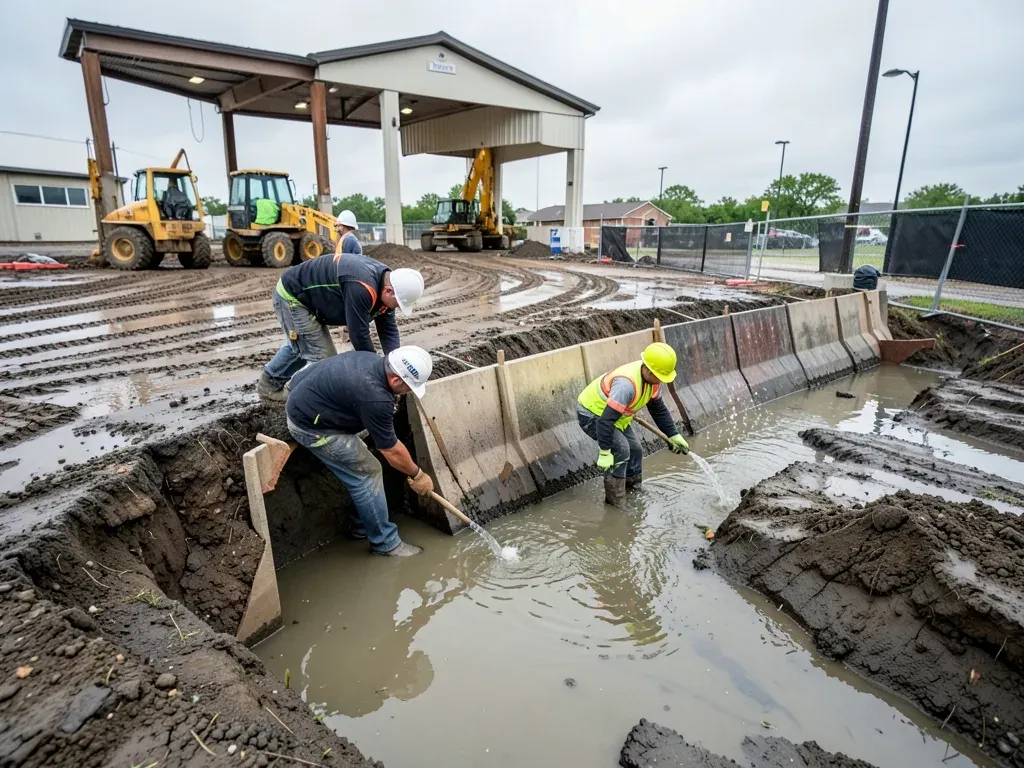
Coordinate materials, washout, and dewatering
Stormwater compliance is not limited to soil erosion. Construction materials and site operations can introduce other pollutants.
The federal construction-permit framework addresses pollution-prevention measures for fuels, oils, chemicals, waste, concrete washout, equipment washing, and similar activities. The Texas permit likewise requires controls to minimize pollutants in stormwater and authorized non-stormwater discharges.
For owners, these requirements translate into practical logistics questions. Where will concrete washout occur? How will fuels and chemicals be stored? Where will dumpsters sit relative to drainage paths? How will paint, stucco, or other liquid waste be managed? If excavations collect water, how will dewatering be evaluated and controlled before discharge?
These decisions should be made before the relevant trade arrives. An improvised washout area or dewatering route can create both compliance risk and cleanup work.
Material storage deserves the same attention. Products that can release pollutants should be protected from exposure where appropriate, and the site should have a response process for spills. The project team should also understand which discharges are prohibited rather than assuming that any clear-looking water can leave the site.
The most effective approach is to connect these controls to subcontractor onboarding and daily field planning. Trade partners should know where designated areas are located and who to contact when site conditions do not match the plan.
Document inspections and corrective actions
Stormwater documentation is most useful when it reflects real field conditions.
Inspection records should identify what was observed, what needed correction, who was responsible, and when the issue was resolved. Photographs can add context, especially when the same area is reviewed over time. If a control is relocated because the site layout changes, the documentation and SWP3 should remain consistent with the field condition.
Owners do not need to review every inspection form, but they should understand how compliance records are managed and whether unresolved items can affect schedule or closeout. This is particularly useful on projects with phased turnover, multiple operators, or long periods between initial land disturbance and final stabilization.
A concise stormwater item in weekly project meetings can help. The team can review recent inspections, open corrective actions, upcoming high-risk site work, planned dewatering, and areas nearing stabilization. That keeps the subject connected to production instead of isolated in a separate compliance folder.
Plan stabilization and termination before the final week
Construction-stormwater responsibilities do not necessarily end when the building is substantially complete.
The Texas permit includes conditions for final stabilization and termination of coverage. Depending on the authorization path and operator role, closeout can involve stabilizing disturbed areas, removing temporary controls when appropriate, completing required documentation, and submitting a Notice of Termination or otherwise ending authorization in accordance with the permit.
This is another reason to plan stormwater closeout with the construction schedule. Landscaping, final grading, utility restoration, pavement, and punch-list work can leave small disturbed areas active late in the project. If those areas are not addressed, the team may not be ready to complete stormwater closeout when other construction work is finished.
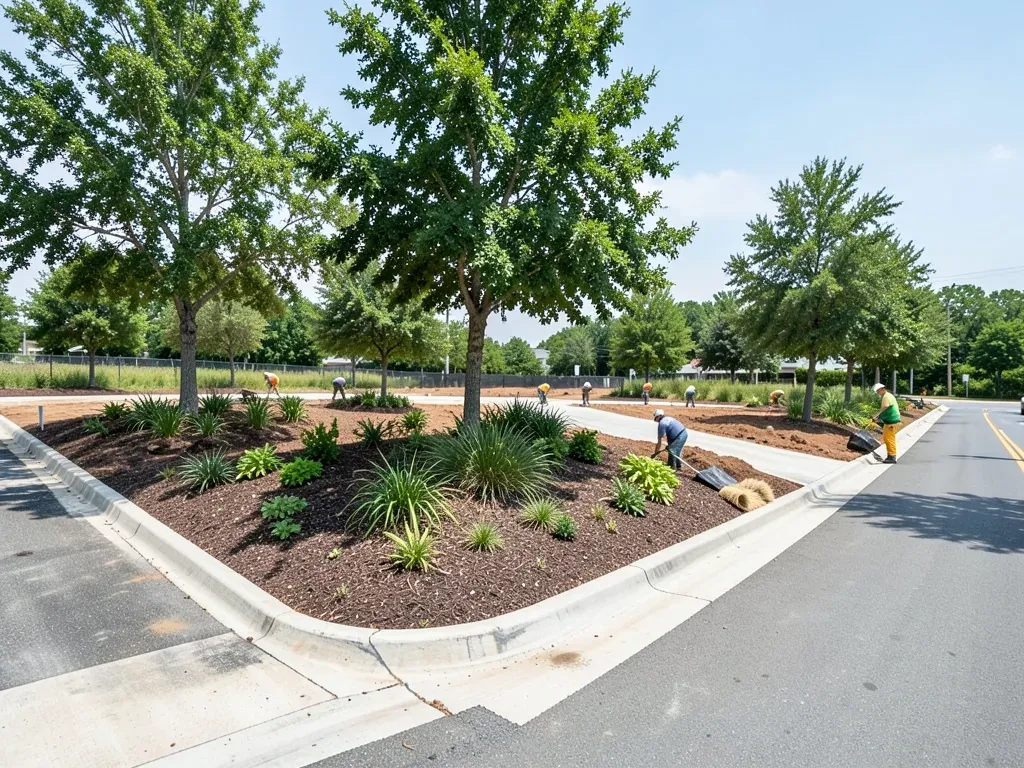
A useful closeout checklist should identify remaining disturbed areas, permanent stabilization status, temporary controls that still serve a purpose, records that must be retained, and the party responsible for ending permit coverage.
For Greater Houston owners, the larger lesson is straightforward: construction stormwater planning works best when it is integrated with civil design, site logistics, field inspections, and closeout. If you are evaluating a project, Adila Construction’s services overview describes its published construction categories. When the property, scope, and target schedule are defined, the contact page is the appropriate place to share those basics with the team.