
Construction guide
Houston Commercial Renovation Asbestos Planning Guide
A practical Greater Houston guide to asbestos inspections, notification timing, abatement coordination, schedule planning, and records before renovation or demolition.
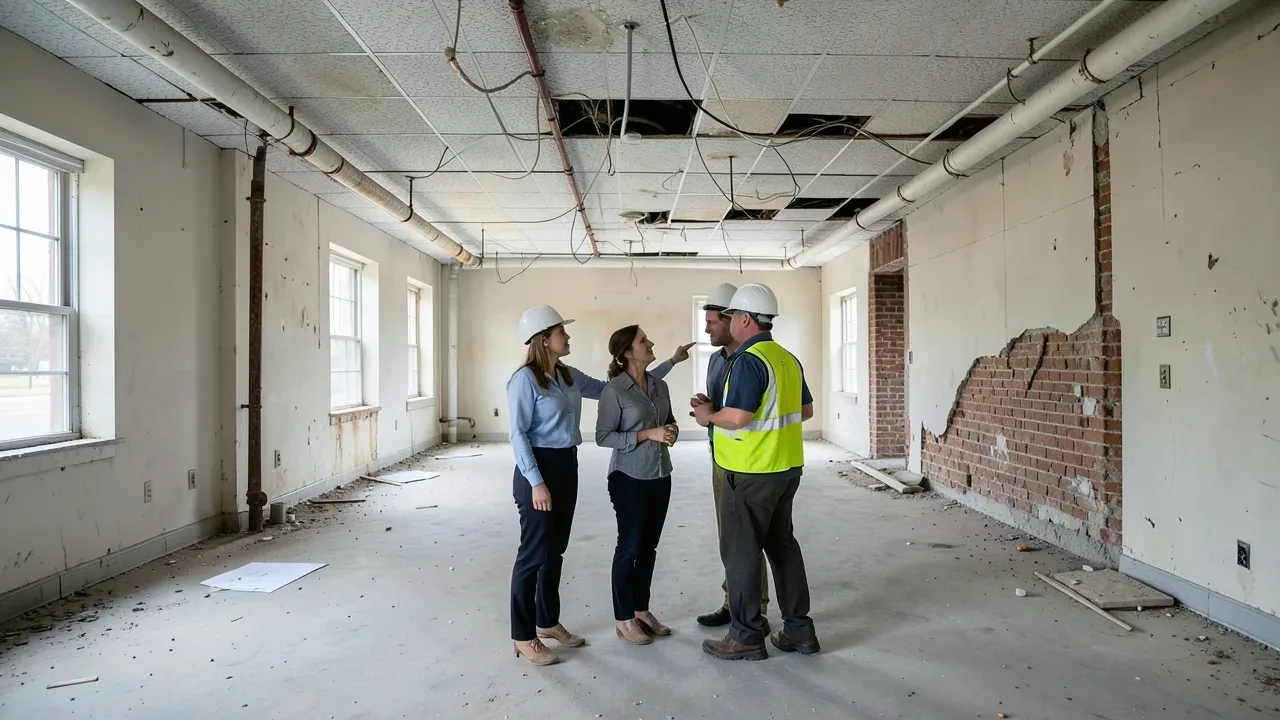
Commercial renovation can expose conditions that were hidden for years behind ceilings, walls, floor finishes, mechanical insulation, and utility chases. For a Greater Houston owner, the important asbestos question is not whether an older building “looks clean.” It is whether the project team has identified regulated materials before demolition, drilling, cutting, removal, or other disturbance begins.
The U.S. Environmental Protection Agency’s asbestos NESHAP applies to demolition and renovation at institutional, commercial, and industrial facilities. EPA states that a thorough inspection is required where a covered demolition or renovation operation will occur. EPA also describes notification and work-practice requirements that depend on the activity and amount of regulated asbestos-containing material. In Texas, the Department of State Health Services administers asbestos and demolition notifications and states that qualifying notifications generally must be submitted at least 10 working days before the relevant demolition, abatement, or disturbance activity.
For owners, the practical value of early asbestos planning is schedule control. A survey, consultant review, notification period, abatement package, containment setup, waste handling, and clearance activity can affect when general demolition and construction can start. This guide is an owner-side coordination framework, not project-specific environmental, legal, or occupational-safety advice.
Start the asbestos review before demolition scope is locked
The best time to resolve asbestos questions is while the renovation scope is still being defined.
EPA says commercial demolition and renovation work is subject to the asbestos NESHAP and that, at minimum, the thorough-inspection requirement applies. That matters because a contractor cannot reliably price selective demolition when potentially regulated materials have not been identified. An unknown condition may later require testing, access restrictions, specialty removal, revised sequencing, or a temporary shutdown of the affected area.
Owners should make the asbestos review part of early due diligence when a project involves an older building or finishes and systems of uncertain age. The review should cover the actual disturbance area, including nearby materials that could reasonably be affected by demolition methods, new penetrations, ceiling work, plumbing changes, duct modifications, or wall relocation.
A useful owner checklist begins with basic questions:
- Is there an existing asbestos survey or operations record for the property?
- Does the existing information cover the exact renovation area?
- Have later remodels introduced materials that were not part of an older survey?
- Will the project open walls, ceilings, shafts, floors, roofs, or mechanical spaces?
- Are the drawings based on assumptions that require destructive verification?
- Who is responsible for determining whether additional inspection or sampling is needed?
The project team should avoid treating a previous report as automatically sufficient. Scope changes can expose different materials, and a report prepared for one tenant area may not describe another.
Separate inspection, notification, and abatement decisions
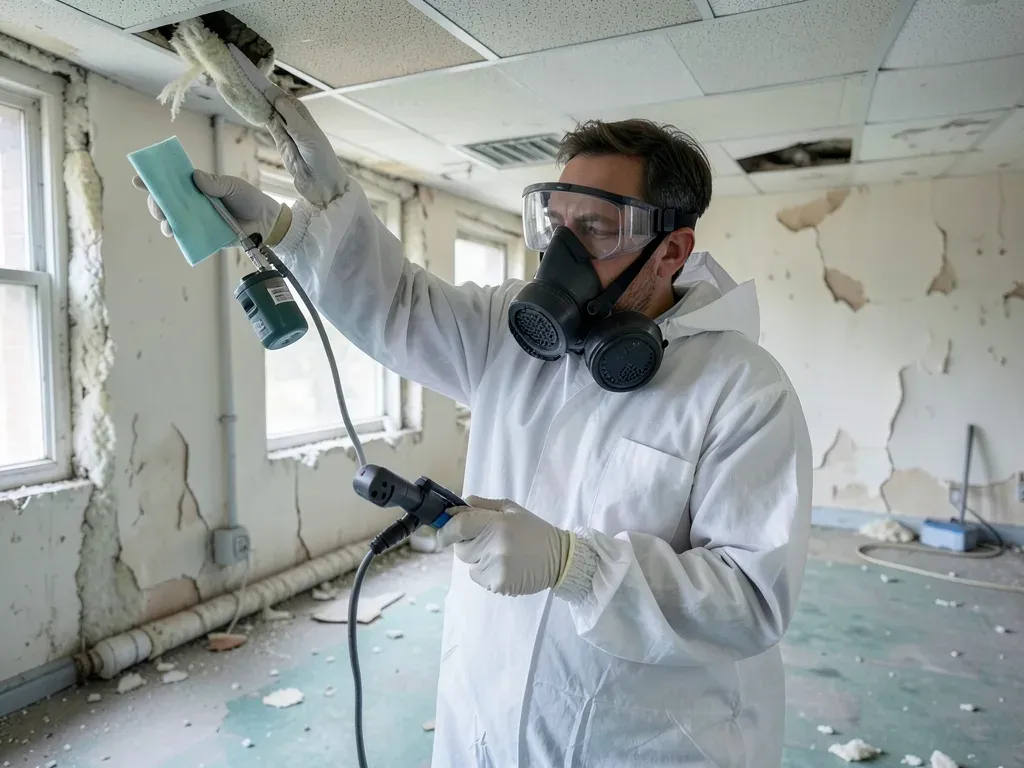
Inspection, notification, and abatement are related, but they are not the same step.
The inspection identifies conditions that can inform the project’s regulatory and construction decisions. EPA notes that notification requirements apply to demolition and to renovations involving certain threshold amounts of regulated asbestos-containing material. Texas DSHS states that demolition notification is required for covered buildings or facilities even when asbestos is not present, and that notification is also required for qualifying renovation or asbestos-disturbance work.
That means an owner should not assume that a “negative” asbestos result ends every administrative requirement. The correct path depends on the building type, the work, quantities, and applicable rules.
A practical responsibility matrix can help. The owner, environmental consultant, design team, demolition contractor, abatement contractor, and general contractor should know who is responsible for each decision and submittal. The matrix should identify who provides the inspection information, who confirms applicability, who prepares notification documents, who performs regulated work, and who releases the area back to the next construction activity.
For bidding, the survey information should be made available in a controlled way so bidders understand the known conditions. If an abatement package is separate from the general construction contract, the schedule should still connect the two scopes. General demolition should not be shown starting in an area before required asbestos work and release activities are complete.
Put notification and abatement on the baseline schedule
Texas DSHS states that asbestos or demolition notifications subject to its rules generally must be made no less than 10 working days before the applicable activity, except where an allowed exception applies. A working-day requirement is different from a calendar-day assumption, so a late notification can affect mobilization.
Owners should therefore treat asbestos milestones as schedule activities rather than notes in a compliance folder.
A simple sequence may include:
- field inspection and sampling, if needed;
- laboratory analysis and consultant report;
- design or project-scope response to the findings;
- notification preparation and submission where required;
- abatement mobilization and containment setup;
- regulated removal and waste handling;
- inspection, air monitoring, or clearance as applicable;
- area release;
- general demolition and renovation.
Not every project uses every step, and the responsible professional should define the actual process. The management principle is consistent: downstream construction should not depend on an unresolved environmental activity.
The same logic applies to procurement. If a mechanical replacement will disturb insulated piping, or a storefront renovation requires demolition near suspect materials, the project team should know that before long-lead equipment or trade mobilization dates are committed.
Coordinate the abatement boundary with the construction plan
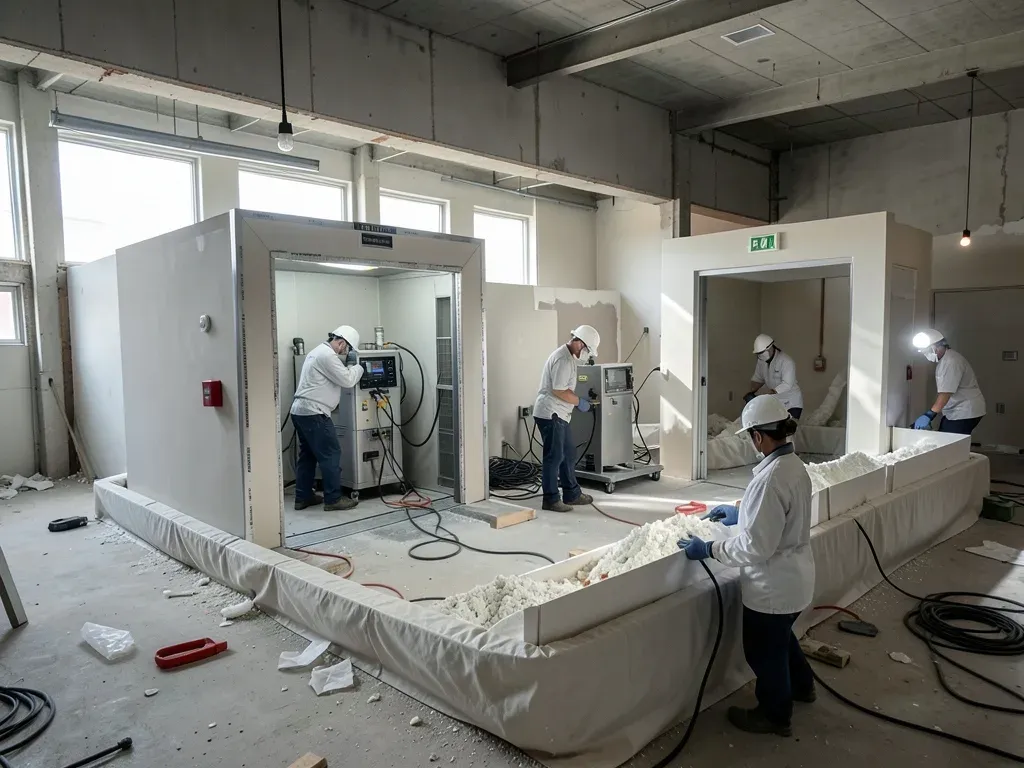
An asbestos abatement drawing or work plan should align with the actual renovation sequence.
If the construction drawings show a wall being removed but the environmental scope covers only the finish on one side, the team needs to understand what happens to adjacent materials. If overhead utilities must remain live, access and protection requirements can affect containment. If part of the building stays occupied, separation, egress, noise, deliveries, and work hours may become project constraints.
Owners can ask the team to overlay the environmental scope with architectural demolition plans. That comparison can reveal gaps before mobilization.
Important coordination points include:
- limits of demolition and abatement;
- access routes for workers and waste;
- temporary partitions and occupied-area separation;
- utility shutdowns;
- ceiling and plenum conditions;
- equipment that must remain in service;
- areas needed for decontamination or staging;
- locations where follow-on trades need access;
- restoration work after abatement is complete.
This is also a budget-control exercise. If abatement exposes damaged substrate, corroded piping, deteriorated deck, or other unrelated conditions, those items should be documented and evaluated separately rather than being assumed to be part of the original environmental scope.
Have a discovery plan for concealed suspect material
Even a well-planned renovation can uncover material that was not visible during the initial review.
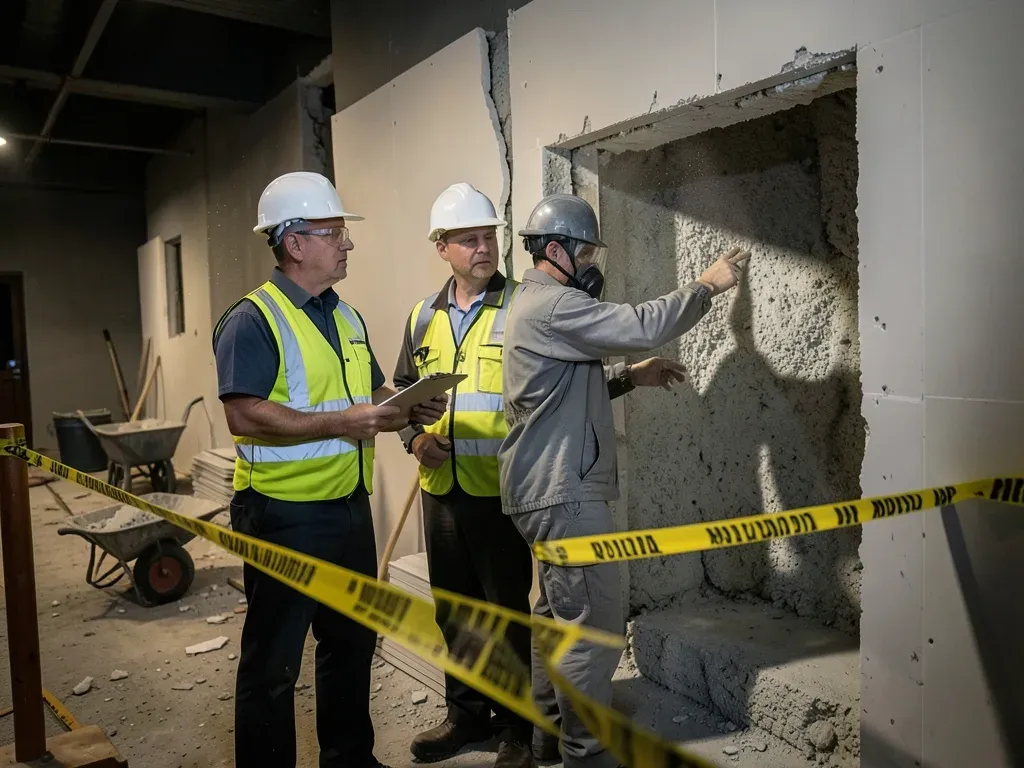
A project should have a clear response when demolition reveals suspect material outside the documented scope. The safest management approach is to stop the affected disturbance, keep workers from continuing through the material, and have the appropriate qualified professional evaluate the condition before work resumes.
The owner should know who has authority to make that call. Field crews should not be forced to choose between maintaining production and raising an environmental concern.
A discovery procedure can define:
- who is notified first;
- how the immediate area is controlled;
- who determines whether sampling or additional review is needed;
- how schedule and cost impacts are documented;
- how revised instructions reach the demolition and construction teams;
- what evidence is required before the area returns to normal work.
The process should be fast enough to support field operations without encouraging crews to bypass it.
Keep records connected to project closeout
Asbestos planning does not end when the regulated work crew leaves.
EPA describes work-practice and waste-handling requirements for regulated asbestos material, including controls intended to reduce releases during removal, packaging, transportation, and disposal. Owners should know where project records are stored and which documents need to be retained with the building’s renovation history.
Depending on the project and applicable requirements, the closeout file may include inspection or survey reports, laboratory results, notifications, amendments, abatement documentation, monitoring or clearance records, waste shipment records, and final drawings showing materials that remain in place.
That record can become useful on the next renovation. A future owner, facility manager, designer, or contractor should be able to understand what was found, what was removed, and what areas were not disturbed.
Project closeout should also confirm that follow-on finishes and systems did not begin before the affected area was properly released for construction. A clean handoff is easier to defend than a sequence reconstructed months later from emails and invoices.
Make asbestos planning part of renovation feasibility
The broader owner lesson is straightforward: asbestos is both a compliance issue and a project-control issue.
Early inspection can improve scope definition. Clear responsibility can reduce administrative gaps. A realistic notification and abatement sequence can protect the baseline schedule. A discovery procedure can limit disruption when concealed conditions appear. Organized records can reduce uncertainty on future work.
For a Greater Houston renovation, owners should build these steps into preconstruction rather than waiting for demolition day. Adila Construction’s remodeling and renovation page describes its published service scope. When the property, proposed scope, available environmental information, and target timing are defined, the contact page is the appropriate place to share the project basics.